Transparency... Playing the Push vs. Pull Game!

Over a three-month period in 2018, four of the five PCAOB board member positions turned over with the fifth board member position changing in November 2019. While this change was dramatic, each board member focused on an area of auditing they were passionate about; a tradition that has taken place with every board member appointed before them. Improving the transparency of the inspection process for financial market investors and users was a consistent theme amongst them.

With this as a backdrop, in July 2020, during the height of the dog days of summer, Board Member Brown presented a speech at the CFA Institute’s Corporate Disclosure Policy Council and Capital Markets Policy Council where he introduced a few aspects of the Board’s processes that, in his view, warrant some future consideration. In any normal year, some of Board Member Brown’s comments would have raised a few eyebrows. This is not a normal year and it seems his comments have not really garnered much press. 


Pushing Transparency Out to the Markets

One of Board Member Brown’s key points was the current anonymization of issuer names in the inspection reports. Since the inception of the PCAOB, the names of the issuers related to the audits with deficiencies have been kept out of the public eye, not disclosed in any inspection reports. Board Member Brown believes it is time to re-consider this. His overarching concern seems to be that keeping the names of these issuers out of the public eye “has significant consequences with respect to the relevance and usefulness of our [PCAOB] reports.” 

So, what issuer information should be in the reports? Should every issuer included in Part I be called out in the report? Let’s go ahead and reflect a little further.


Audit Committee Oversight 

It is a common belief that audit committees and investors should be the key players in needing to know about any audit deficiencies. Although there is no formal requirement for an auditor to disclose its audit deficiencies – and thus no formal transparency requirement – as part of an audit committee’s due diligence, corporate governance and oversight (including the appointment of the auditors), audit committees should be asking the auditor if a recent audit has been inspected by the PCAOB and what the results were. The audit committees should also be getting an understanding of the audit firm’s quality control issues in Part II of the report including the remedial actions the audit firm is undertaking to address these deficiencies. This transparency will help the audit committee form its opinion on the quality of its auditors that it is engaging to opine on its financial statements. 


Investors’ Access to Information (or lack thereof)

Investors, however, are unfortunately at a disadvantage as they are unable to easily discern audit quality concerns, unless they are made public in Part II of the report – and even in this case there is no identification of specific issuers. Typically, an investor is only aware of potential audit engagement deficiencies when they are reported on Form 8-K (e.g. issuer notifies public that its opinion can no longer be relied upon because of an unexpected restatement). That does not seem to be a very transparent process as by that time the horse has bolted the barn! Board Member Brown believes that naming issuers in inspection reports will help accelerate the timing of disclosing this information to investors. 

Over the years, most investors have come to understand that an audit deficiency does not necessarily mean that the financial statements of the audit company are incorrect. I believe that with focused board outreach and continued education, audit committees and other stakeholders will understand the implications of audit findings and what that means from a financial statement accuracy perspective. Who knows, identifying an issuer by name in the report may spur an improvement in audit quality. After all, who wants their work called out in public? 

At the one end of the spectrum should inspection reports continue the status quo and not publicly disclose issuer names, or go the opposite extreme and identify all issuers? Or should the regulator do something in between – perhaps only identify issuers if there is a known restatement or new material weakness identified from the audit deficiency? Personally, I feel we must move away from complete anonymity! Since the purpose of the PCAOB is to promote investor protection, misstated financial statements and misstated internal control assessments that are identified through the PCAOB Inspection process should be brought to light faster.


Affiliate Audit Firm Transparency

Board Member Brown also raised the concern of transparency of inspection results between affiliate audit firms. Each audit firm, whether or not it is an affiliate of another firm, is inspected individually and in its own right by the PCAOB. Since each firm is a separately legal entity, with separate registration with the audit regulator, the Board does not share inspection results between affiliate firms. In fact, one affiliate does not know if or when another affiliate is inspected. Thus, a lead audit team is at the same disadvantage of every other user of the inspection report as it does not know who the issuers are in the affiliate’s inspection report. In order to understand the quality of an affiliate / component team (in say country B) who is assisting a lead audit team (in country A), many audit firms require the country A lead audit team to confirm with the country B affiliate audit team (1) if the country B component of the issuer has been inspected, and (2) if so, what the results of the inspection were (i.e. did the PCAOB issue any comment forms as a result of its inspection). With the advent of the global economy and increased usage by lead audit teams of component auditors in other countries, transparency of issuer names in inspection reports can only help. 


Pulling Transparency by the Markets

However, transparency of information from the internal workings of the PCAOB out to the stakeholders can also reap big benefits for audit quality. It seems slightly counterintuitive that as of the date of this article (September 2020) only 10 inspection reports have been issued this year! There must be a lot of things going on behind the scenes at the PCAOB! JGA’s detailed tracking of publicly available report data shows the number of issued inspection reports have decreased dramatically over the last 5 years. In 2016, there were 215 inspection reports issued or re-issued; 190 in 2017; 153 in 2018; 104 in 2019; and 10 so far in 2020
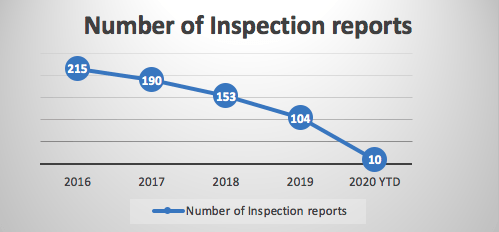
As we said previously 2020 is not a normal year for anyone – and considering the Board’s recent project to revise the form and layout of the reports which could be the cause of some of the delay – that is still a large drop-off in issued inspection reports. With so few inspection reports issued this year, there must now be a tremendous backlog of hundreds of inspection reports waiting to be issued. 


How Old is Too Old

Stepping back for a second, there are several unintended consequences arising from this backlog:

  1. Many of the backlogged inspection reports are inspections that were primarily undertaken in 2019 (with some probably going back to 2018). That means that in all probability these would have been inspections performed on 2018 fiscal year ends audits. So once these backlogged reports get issued (whether in the fall of 2020 or sometime in 2021), the question to be asked is how useful and relevant is this information for investors, readers, and users of the inspection reports? Now granted, the individual firms are aware of the audit deficiencies they encountered in their 2018 audits.

    When we assist a firm with an inspection or are hired to help make improvements in quality controls, our advice is the same: regardless of the delay in the release of your report, take a proactive approach to fixing the audit deficiencies. Even though it won't change the delivery of this information to external users and investors, it is the right thing to do.


  2. Another aspect to consider is that even when these backlogged reports are issued, the Part II portion of the inspection report which describes the quality control issues, is kept non-public. Audit firms have 12-months to remediate these quality control deficiencies. Even once the 12-months have passed, the Board performs its own assessment of the firm’s remediation response. That takes some time to do as well.

    If a firm does not appropriately remediate its quality control deficiencies, then its Part II findings are likely only released to the public in 2022 or later. How relevant is this information from a 2018 year-end audit in 2022? Our clients that start the remediation process early (even before they receive the report), have greater success at identifying and addressing root causes and fixing issues before they repeat in next year's audit. 


At the end of the day, we can all agree that transparency is generally a positive and welcome action and that Board Member Brown’s comments should be considered further. The PCAOB is encouraged to be informing and interacting with all its stakeholders, so that we all understand the goals and mission of the US audit regulator. At the end of the day we are all aiming for the same goal – improvement in audit quality. 


Geoff Dingle, JGA Managing Director, works with PCAOB-registered accounting firms helping them identify, develop, and implement opportunities to improve audit quality. With over 20 years of public accounting experience, he spent nearly half of his career at the PCAOB where he conducted inspections of audits and quality control. Geoff has extensive experience in audits of ICFR and firms’ systems of quality controls. Prior to the PCAOB, he worked on audits in various industries at Deloitte in Atlanta and Durban (South Africa).


Download this article
July 27, 2026
The Cost of Standing Still Why Inspection Fear Can Create AI Quality Risk In our recent article AI Governance Belongs in the Boardroom, Not the Server Room, we explained why firm leadership must take responsibility for AI governance rather than treating AI as a technology issue. In When AI Becomes a Quality Risk: Why Governance Alone is Not Enough, we examined what happens when governance exists, but validation, monitoring, implementation, and ongoing evaluation fail to keep pace with adoption. This article examines a different risk: what happens when inspection uncertainty causes firms to delay AI adoption? While caution is appropriate, avoiding AI altogether may preserve the very quality challenges firms are trying to solve. The question is no longer simply whether AI can be used safely. The better question is whether the firm can govern AI use intentionally enough to improve audit quality without creating unmanaged risk. Bottom line: Avoidance is not a governance strategy. A firm that refuses to define approved AI use cases may reduce visible adoption, but it may also increase the likelihood of inconsistent practices, informal use, and missed opportunities to address known quality risks. Fear of Inspection Can Become a Quality Management Issue Caution around AI is understandable. Regulators continue to emphasize sufficient appropriate audit evidence, professional skepticism, supervision, documentation, and accountability. AI does not change those expectations, it simply requires firms to demonstrate how AI-assisted work was governed, validated, supervised, and documented. That is why the issue belongs within the system of quality management. AI adoption should not begin with a technology question. It should begin with a quality risk question: where could governed use of AI help the firm respond to recurring quality challenges, and what safeguards must exist before teams rely on the tool? What Inspectors Are Likely to Ask Is Familiar A common misconception is that inspection risk increases simply because a firm uses AI. The more practical risk is that the firm cannot explain how AI use fits within existing audit and quality management expectations. When AI supports audit execution or quality management activities, firms should be prepared to explain: Why the tool was used for a specific audit objective or quality response; How the firm evaluated the reliability, completeness, and relevance of inputs; How outputs were validated before teams relied on them; How professional judgment and skepticism remained central to the conclusion; How firm leadership monitored adoption, consistency, exceptions, and emerging issues. They apply existing expectations to a new way of executing or supporting audit work. A firm that can answer them with clarity is better positioned than a firm that avoids formal AI adoption while informal or inconsistent practices develop outside the quality management framework. Avoidance Can Create Its Own Quality Risks Choosing not to adopt AI may feel like the lower-risk path, particularly for engagements subject to heightened regulatory scrutiny. But avoidance does not eliminate quality risk. In some cases, it preserves deficiencies that technology could help address if implemented with appropriate governance, validation, and monitoring. For example, prolonged hesitation may: Limit the firm’s ability to analyze larger or mor complete populations of data; Maintain manual procedures that are difficult to supervise consistently across engagement teams; Delay improvements to methodology, documentation, training, and review practices; Reduce the firm’s ability to respond to recurring inspection or internal monitoring observations; Create uneven practices where some teams experiment informally while others avoid AI entirely; and Make it harder to attract and retain professionals who expect modern tools and clear guidance. The quality risk is not that every firm must immediately deploy AI broadly. The risk is that leadership may mistake inaction for control. If the firm does not define what is permitted, what is prohibited, and what must be validated, teams may fill the gap themselves. Case Study: When Formal Caution Leads to Informal AI Use Consider a firm that has not approved AI for use in audit execution because leadership is concerned about inspection scrutiny. The firm allows AI for general administrative tasks, but it has not issued detailed guidance addressing engagement-level use, documentation expectations, validation requirements, confidentiality restrictions, or supervision responsibilities. At the engagement level, teams continue to face time pressure, complex documentation requirements, and recurring review notes. Some team members begin using publicly available AI tools to summarize contracts, identify potential risk considerations, draft workpaper language, or explain technical accounting concepts. They do so with good intentions and do not view the use as problematic because the firm has not clearly defined boundaries. Several issues emerge: Governance is unclear because no one has formally approved the use case; Validation practices vary by team member and engagement; Supervision does not fully account for AI involvement; Documentation does not explain how AI-assisted outputs were evaluated; Confidentiality and data protection considerations are inconsistently addressed; and Leadership lacks visibility into how broadly AI is being used in practice. The firm intended to reduce inspection risk by delaying adoption. Instead, it created a more difficult risk profile: informal AI use without a consistent governance structure. From a quality management perspective, the issue is not simply that AI was used. The issue is that the firm did not create a controlled path for responsible use. The Better Question: How Should We Govern Responsible Adoption? Progress begins when firms shift the conversation from whether AI should be used to how AI can be governed as part of the system of quality management. That does not mean approving every tool or every use case. It means creating disciplined pathways for evaluating where AI may support audit quality and where the risks outweigh the benefits. Before expanding AI use, leadership should be able to answer: Which AI use cases are approved, restricted, or prohibited? Which quality risks does each approved use case address? What new risks does the use case introduce? What validation is required before outputs can be used? What documentation should appear in the workpapers or quality management records? Who owns the tool, the methodology, the training, and the monitoring process? How will leadership identify inconsistent uses, exceptions, or emerging concerns? These questions make AI adoption more inspection-ready because they connect the technology to governance, methodology, documentation, supervision, and monitoring. They also help firms avoid the false choice between broad, unmanaged adoption and complete avoidance. Inspection Readiness Comes From Control, Not Inaction Inspection readiness does not require firms to wait for AI-specific regulation. It requires firms to demonstrate that AI use remains grounded in existing audit quality principles: accountability, reliable evidence, professional judgment, supervision, and documentation. A governed approach, including approved uses cases, validation procedures, documentation standards, training, and monitoring, allows firms to innovate while maintaining control. Avoiding AI without addressing informal use often leaves leadership with less evidence of control, not more. Key Takeaways Avoidance is itself a governance decision. Existing audit principles, not new AI rules, remain the foundation for inspection readiness. Informal AI use may create greater inspection risk than transparent, governed adoption. Firms should evaluate AI as a quality response, not only as a technology initiative. Responsible adoption requires approved use cases, validation expectation, accountability, training, documentation standards, and ongoing monitoring. Standing still may preserve known quality challenges while allowing uncontrolled AI practices to develop beneath the surface. Final Thoughts The firms that will be most successful in the AI era are unlikely to be those that adopted AI the fastest or avoided it the longest. They will be the firms that can demonstrate thoughtful governance, disciplined implementation, and continuous oversight. Inspection readiness comes from evidence of control, not evidence of hesitation. Johnson Global Advisory supports firms in developing and evaluating AI governance frameworks, including approved use cases, validation practices, documentation standards, monitoring activities, and accountability structures. An independent review can help leadership assess whether the firm’s approach to AI is disciplined, transparent, and inspection-ready without allowing fear of inspection to slow responsible innovation.
July 16, 2026
In March 2026, the Public Company Accounting Oversight Board (PCAOB) issued a Request for Public Comment as part of its effort to develop a new 2026–2030 strategic plan and reassess future standard-setting priorities. The Board sought stakeholder input on several fundamental questions, including the future direction of inspections and enforcement, the impact of its new quality control standard (QC 1000), enhancements to inspection reporting, standard-setting priorities, international alignment, the role of technology and artificial intelligence, and opportunities to improve transparency with stakeholders. The PCAOB indicated that this feedback would help shape both its strategic plan and future regulatory focus areas.  The response was significant. Stakeholders from across the audit ecosystem—including audit firms, investors, regulators, academics, technology providers, and professional organizations—submitted comment letters addressing how audit oversight should evolve over the next several years. JGA contributed to this dialogue through its own submission to the PCAOB, offering perspectives on inspection modernization, quality management, transparency, and the future of audit oversight. The breadth of feedback provides a valuable view into the challenges, priorities, and expectations shaping the next phase of audit regulation. JGA reviewed 69 comment letters submitted in response to the PCAOB’s request for comment and identified recurring themes across stakeholders. While perspectives vary on implementation, a broader message emerged. Firms are increasingly being asked to demonstrate that audit quality is embedded throughout their organizations, not only within individual engagements. Across stakeholders, there is growing emphasis on system-level quality management, enhanced monitoring, more transparent reporting, stronger emerging technologies, and the ability to respond effectively to evolving regulatory expectations. For many firms, the challenge is no longer simply complying with requirements but demonstrating that audit quality can be sustained at scale. The responses do not call for incremental refinement. They point toward structural change. A System Under Pressure A clear pattern emerged across the comment letters: audit quality is increasingly dependent on access to skilled professionals. For firm leaders, these pressures create practical challenges that extend beyond compliance. Audit firms face increasing difficulty recruiting and retaining experienced professionals while simultaneously responding to expanding regulatory expectations. Many firms must invest in quality control infrastructure, training programs, monitoring activities, and technology enhancements at a time when talent resources are already constrained. This concern is framed not as a near-term challenge, but as a foundational risk to audit quality. The sustainability of the profession, both in terms of talent and institutional capacity, is emerging as a critical issue. At the same time, smaller firms frequently highlighted the disproportionate cost and scalability challenges associated with regulatory compliance, with several respondents warning that increasing complexity may reduce participation among smaller audit providers. Together, these pressures point to a broader tension: how to maintain rigorous oversight while supporting a sustainable and competitive audit market. Reimagining the Inspection Model The most consistent and concentrated feedback across the comment letters relates to the PCAOB’s inspection model. The comment letters suggest that stakeholders increasingly expect inspection programs to provide more context, better severity differentiation, and clearer connections between inspection findings and firm-level quality management systems. Several responses also suggest moving away from binary or pass/fail-style evaluations toward graded or tiered models that better reflect the severity and context of findings. For audit firms, inconsistent inspection outcomes can create uncertainty regarding regulatory expectations, remediation priorities, and resource allocation. When firms are unable to clearly distinguish between systemic quality concerns and less significant documentation deficiencies, it becomes more difficult to prioritize corrective actions and demonstrate the effectiveness of remediation efforts. Taken together, this feedback signals a clear direction- inspection programs must evolve from retrospective, engagement-focused reviews into frameworks that assess how firms operate as systems. Quality Control as the Foundation of Audit Oversight Closely tied to inspection reform is the growing emphasis on quality control systems as the primary driver of audit quality. Perhaps the strongest signal from the comment letters is the growing expectation that audit oversight should focus on the effectiveness of firm’s quality management systems rather than solely on engagement-level outcomes. This includes alignment with emerging frameworks such as QC 1000 and a greater focus on firm-level processes over individual audit outcomes. The implication is significant. Quality is increasingly viewed as systemic, rather than situational, requiring oversight models that evaluate governance, processes, and internal controls at the organizational level. Increasing emphasis on quality control systems requires firms to demonstrate how governance, monitoring, root cause analysis, corrective actions, training, resource management, and accountability mechanisms collectively support audit quality across the organization. From Periodic Review to Continuous Monitoring Another defining theme is the push toward a more data-driven model of audit oversight. Technology providers, data organizations, audit firms, and individual respondents frequently advocated the use of centralized audit data, structured reporting, and analytics-enabled monitoring to support real-time or near real-time oversight. This represents a shift away from periodic, sample-based inspections toward continuous visibility into audit activity. For many firms, this shift raises operational challenges related to data availability, technology infrastructure, governance, and monitoring capabilities. Organizations may need to evaluate whether current systems can support more timely reporting, analytics-enabled monitoring, and greater transparency into quality-related metrics. Technology, in this context, is not viewed as an enhancement, but as an enabler of a fundamentally different oversight model—one built on accessibility, comparability, and timeliness of data. Transparency and Investor Relevance A consistent concern across investors and market participants is the limited usefulness of current reporting outputs. Audit reports, and in particular Critical Audit Matters (CAMs), are frequently described as lacking clarity and specificity. Respondents note that disclosures often fail to provide meaningful insight into what was audited, how risks were addressed, or what the outcomes were. Similarly, PCAOB inspection reports are seen as insufficiently detailed and not clearly connected to investor decision-making. The feedback reflects a broader expectation that audit oversight should produce information that is more transparent, comparable, and meaningful to investors. At a fundamental level, this reflects a broader expectation: that audit oversight should produce outputs that are not only accurate, but usable. AI: A Transformational Force with Governance Implications AI is consistently identified as a transformative force in auditing. Stakeholders recognize its potential to enhance analytics, improve anomaly detection, and increase efficiency. Common recommendations include greater transparency around the use of AI, clear accountability for outcomes, and safeguards to ensure that human judgment remains central to audit conclusions. Interestingly, respondents devoted relatively little attention to AI’s capabilities and significantly more attention to governance, accountability, transparency, and validation. That shift suggests the profession is becoming less concerned with whether AI will be adopted and more concerned with how its use will be governed. The Need for Coordination and Alignment Finally, many respondents highlight the importance of coordination across regulatory and standard-setting bodies. Feedback includes calls for clearer delineation of responsibilities between the PCAOB and other regulators, as well as greater alignment with international standard setters such as the International Auditing and Assurance Standards Board (IAASB). As capital markets continue to operate globally, stakeholders are increasingly focused on consistency across jurisdictions and the reduction of duplication in regulatory requirements. For firms operating across multiple regulatory environments, inconsistent requirements can increase compliance complexity, duplicate effort, and create challenges in maintaining globally consistent methodologies and quality management systems. What makes these themes particularly noteworthy is not that they represent entirely new concerns. Rather, stakeholders from across the audit ecosystem appear to be converging around a common view of where oversight should evolve. The emerging emphasis on quality management systems, transparency, technology-enabled monitoring, and governance suggests that firms may face increasing expectations to demonstrate not only audit execution quality, but also the effectiveness of the systems designed to support it. Converging Signals, Persistent Tensions While the themes across the comment letters are highly consistent, they also reveal important tensions that will shape the next phase of reform: The need for transparency alongside regulatory and legal constraints The balance between innovation and control, particularly in the use of AI The challenge of maintaining investor protection while supporting smaller firms The trade-off between standardized oversight and operational flexibility These tensions are not contradictions. They reflect the complexity of modern audit oversight. What Audit Firms Should Do Now While the future direction of PCAOB oversight will continue to evolve, firms do not need to wait for final regulatory action to prepare. In the near term, audit firms should consider: Evaluating whether their quality control systems are designed, implemented, and documented in a manner that demonstrates firm-level accountability for audit quality. Assessing whether inspection findings, internal monitoring results, and root cause analyses are connected to systemic corrective actions. Reviewing how audit technology, data analytics, and AI-enabled tools are governed, documented, and subject to human oversight. Enhancing transparency in audit committee communications, CAM evaluations, and other reporting outputs. Preparing for oversight models that may place greater emphasis on consistency, scalability, responsiveness, and continuous monitoring. Conclusion While the future direction of PCAOB oversight remains uncertain, the themes emerging from these comment letters point toward a more systemic, transparent, and technology-enabled approach to audit quality oversight. Firms that begin strengthening their quality management systems, monitoring capabilities, governance structures, and reporting practices today may be better positioned to respond to future regulatory expectations and demonstrate sustainable audit quality in an increasingly complex environment. JGA helps audit firms assess, design, and enhance quality control systems, inspection-readiness processes, remediation programs, audit methodology, training, and governance frameworks for emerging technologies. As audit oversight continues to evolve, firms that proactively evaluate their systems, documentation, and monitoring activities will be better positioned to respond to future regulatory expectations.
June 29, 2026
In our recent article, AI Governance Belongs in the Boardroom, Not the Server Room, we explored why firm leadership, not technology teams alone, must take ownership of AI governance. Governance establishes accountability. However, accountability alone does not prevent quality deficiencies. As firms increasingly deploy AI-enabled tools across audit execution and quality management processes, a new challenge is emerging. The very technology intended to improve consistency, efficiency, and audit quality may introduce new risks if governance, validation, and monitoring practices fail to keep pace. For Managing Partners, Chief Quality Officers, and SQMS leaders, the question is no longer whether AI should be adopted. The question is whether the firm’s system of quality management is prepared to govern its use. In this article, we examine a practical question that follows naturally from that discussion: What happens when governance exists, but the firm’s quality management processes fail to keep pace with technology adoption? Governance is Only the Beginning The governance discussion often focuses on who is responsible for AI. Equally important is how firms integrate AI into their systems of quality management. When firms deploy AI-enabled tools to support risk assessment, testing, supervision, or documentation, those tools become part of the firm’s quality response. Technology-related issues rarely present themselves as technology problems. More often, they appear as deficiencies in audit execution, supervision, documentation, or quality management. By the time those deficiencies become visible, the underlying technology considerations may have already affected multiple engagements. As firms evaluate the role of AI within their quality management, one governance question deserves particular attention: Who is accountable when the tool gets it wrong? While technology teams may support implementation, responsibility for how AI-enabled tools influence audit quality resides with firm leadership and the system of quality management. Leadership should evaluate whether AI-enabled tools align with firm methodology, support professional judgement, and introduce risks that require additional oversight. Firms create unnecessary quality risk when they treat AI primarily as an innovation or IT initiative rather than a quality management consideration. How AI Creates Quality Risks The use of AI does not change the auditor’s responsibilities. Requirements relating to audit evidence, professional skepticism, supervision, review, and documentation continue to apply. What changes is the way those risks may manifest. AI can accelerate processes, but it can also accelerate the consequences of weak controls, insufficient oversight, or flawed assumptions. The very technology implemented to improve audit quality may become the source of future inspection findings. AI introduces several audit quality risks, including: Over-reliance on automated outputs Reduced professional skepticism Inconsistent application across engagements Limited transparency around how conclusions are generated Insufficient documentation of judgment Unlike traditional technology risks, these issues may not be immediately visible. Deficiencies often emerge only after engagement teams have relied upon the technology across multiple audits. Firms may use AI-enabled tools to identify unusual journal entries or summarize large data populations. However, when engagement teams rely on AI-generated outputs without sufficiently applying professional judgment, skepticism, and client-specific knowledge, important risk indicators may be overlooked or insufficiently documented. This distinction is important because technology-related issues rarely present themselves as technology problems during an inspection, internal review, or remediation effort. More often, they appear as deficiencies in audit execution, supervision, documentation, or quality management. Through our work supporting firms with inspections, remediation initiatives, and quality management programs, we have observed that the underlying technology considerations are often identified only after broader quality concerns begin to emerge. Case Study: Accelerated Technology and AI Implementation Across our work with firms of varying sizes, we are observing a consistent pattern. Leadership focuses heavily on tool selection and implementation timelines, while significantly less attention is devoted to validation, monitoring, and ongoing evaluation. As a result, firms are discovering quality concerns only after the technology has already been deployed broadly across engagements. Consider a firm that adopted an AI-enabled risk assessment tool as part of its response to inspection findings related to audit execution and documentation. Leadership viewed the implementation as part of its remediation strategy and expected the technology to improve consistency across engagements. However, because validation, methodology updates, training, and monitoring failed to keep pace with implementation, engagement teams began relying on outputs that had not been sufficiently evaluated. Several challenges emerged. The firm had not fully validated the tool’s audit functionality, methodology updates were incomplete, training was limited, and accountability for oversight had not been clearly established. Subsequent post-issuance reviews identified engagement deficiencies directly tied to improper reliance on the tool’s outputs. By that stage, the tool had already been deployed across multiple engagements, amplifying the impact of those deficiencies. The lesson extends beyond implementation. Firms often devote significant effort to deploying new technology but considerably less attention to evaluating outcomes after deployment. Leadership should periodically ask a simple question: Is the tool improving quality? Without ongoing evaluation, firms may assume technology is achieving its intended objectives while quality risks continue to develop beneath the surface. Trusting AI Requires Validation Effective governance requires more than approving technology investments. At its core, validation is about answering a fundamental question: How do we know the output can be trusted? Leaders must understand how the firm validates AI-generated outputs and demonstrates that those outputs support audit objectives. How would the firm demonstrate to an inspector, peer reviewer, or internal reviewer that the tool was appropriately validated and monitored? Before deploying AI-enabled tools, firm leadership should be able to answer: How does this technology support the firm’s audit methodology? What quality risks does it introduce? How will outputs be validated? How will use be monitored across engagements? Final Thoughts Governance establishes accountability, but accountability alone does not ensure audit quality. Firms create risk when they treat AI implementation as a technology project instead of a quality response. The most significant AI risk facing firms today may not be the technology itself. It may be the assumption that implementation alone is sufficient. As firms continue adopting AI-enabled tools, leadership should consider a simple question: If this technology contributes to an engagement deficiency next year, can we demonstrate that we appropriately governed, validated, implemented, and evaluated its use? At Johnson Global Advisory, our perspective is informed by work performed across inspections, remediation efforts, technology risk assessments, and quality management initiatives. As firms continue integrating AI into audit execution and quality management processes, understanding how these areas intersect may become just as important as the technology itself.
June 29, 2026
WASHINGTON, D.C.: Johnson Global Advisory is proud to support Santa Monica College through a donation to its STEM Program—investing in educational opportunities that prepare students for careers in science, technology, engineering, and mathematics. Santa Monica College’s STEM Program provides students with access to high-quality academic resources, hands-on learning experiences, and pathways to transfer to four-year institutions and enter in-demand fields. By fostering critical thinking, innovation, and technical skills, the program helps equip students with the tools they need to succeed in an evolving workforce. Katherine Moe writes, “We are deeply grateful to Johnson Global Advisory for its sponsorship of Santa Monica College’s Launch the Future campaign and its investment in the next generation of STEM leaders and innovators. This support expands access to hands-on research, industry-standard technology, scholarships, mentorship, and professional connections—ensuring financial barriers do not stand in the way of talented students pursuing careers that will shape the future of science, healthcare, technology, and innovation.” "My connection to California makes this especially meaningful, " said Jackson Johnson, JGA President. "Supporting the Santa Monica College STEM program reflects our broader commitment to education, access, and we’re proud to invest in opportunities that help shape the next generation of leaders." About Johnson Global Advisory Johnson Global partners with leadership of public accounting firms, driving change to achieve the highest level of audit quality. Led by former PCAOB and SEC staff, JGA professionals are passionate and practical in their support to firms in their audit quality journey. We accelerate the opportunities to improve quality through policies, practices, and controls throughout the firm. This innovative approach harnesses technology to transform audit quality. Our team is designed to maintain a close pulse on regulatory environments around the world and incorporate solutions which navigate those standards. JGA is committed to helping the profession in amplifying quality worldwide. Visit www.johnson-global.com to learn more about Johnson Global.
June 29, 2026
As discussed in our prior articles, What Regulators Expect to See When AI is Used and AI Governance Belongs in the Boardroom, Not the Server Room, firms increasingly recognize that AI governance belongs within the system of quality management. However, inspection experience shows that even well-designed governance frameworks do not eliminate risk. Significant failures occur not only at the policy level, but also at the engagement level, where AI outputs are relied upon as audit evidence without sufficient validation. This article focuses on that execution gap. Specifically, it examines why validation of AI is emerging as one of the most significant audit evidence risks facing public company auditors today. For public company auditors, AI validation is no longer a technical exercise. It is an audit quality issue — and increasingly, an inspection issue. In the eyes of regulators, AI does not reduce evidentiary requirements; it changes how evidence must be evaluated, corroborated, and defended . How AI Changes Audit Evidence—and Raises the Validation Stakes PCAOB auditing standards governing audit evidence have not been rewritten for AI. The fundamental requirement remains the same: auditors must obtain sufficient appropriate audit evidence to support their opinion. What has changed is the evidence pipeline: when AI is used, outputs are often indirect (generated through models rather than procedures alone), abstracted (summaries, risk flags, or scores rather than raw data), and less intuitive to evaluate using traditional audit instincts. This creates a new risk: auditors may rely on AI assisted outputs without fully validating how those outputs were produced, what they mean, or whether they are reliable. From an inspection perspective, AI introduces a simple but critical question: How does the auditor know the AI result is reliable enough to rely on as audit evidence? Inspectors are increasingly focused on whether the engagement team can demonstrate the completeness and accuracy of inputs, the reasonableness of assumptions/logic (including prompts), the consistency and explainability of outputs, and the auditor’s independent evaluation and corroboration. A common misconception is equating firm tool approval (vendor diligence, IT review, or risk assessment) with audit evidence validation. Approval is necessary, but it is not sufficient: validation must occur at the engagement level, in the context of the specific audit objectives, data, and risks. Where AI Validation Commonly Breaks Down In practice, AI validation risk often arises in predictable ways:
June 8, 2026
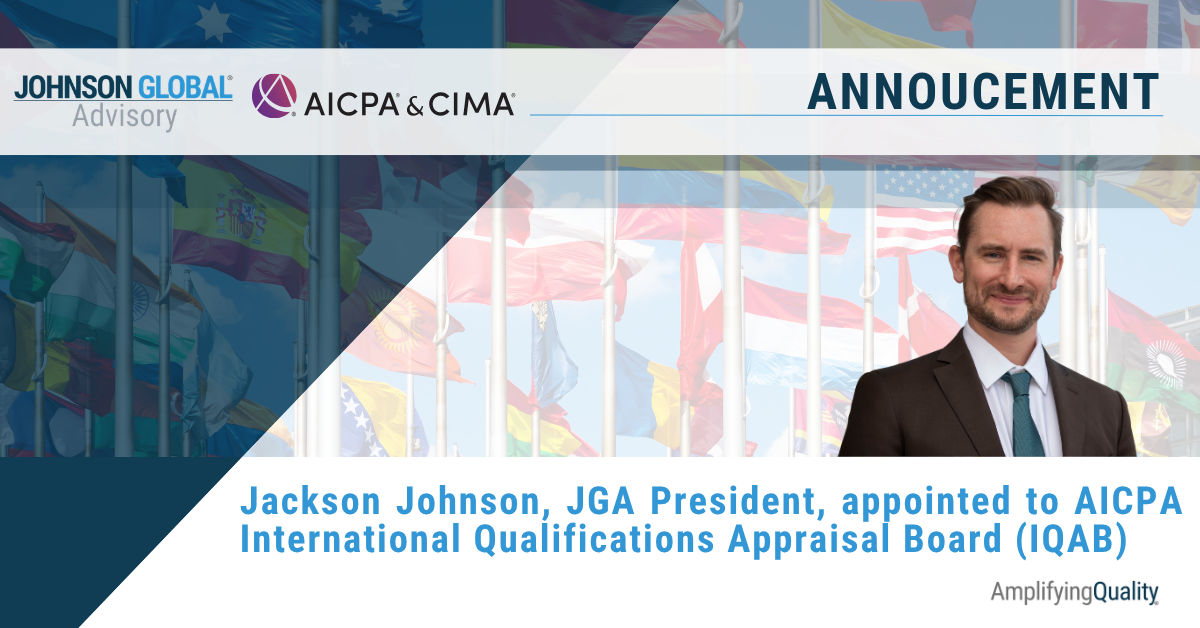
Johnson Global Advisory is pleased to announce that Jackson Johnson, CPA, President, has been appointed to serve on the AICPA & NASBA International Qualifications Appraisal Board (IQAB). The IQAB is responsible for evaluating international accounting qualifications and facilitating mutual recognition agreements between the United States and other countries, helping to support global mobility and consistency in professional standards. “It’s an honor to serve on the IQAB and contribute to efforts that strengthen the global accounting profession,” said Johnson. “As the profession continues to evolve, collaboration across jurisdictions is critical to maintaining high standards and enabling greater mobility for accounting professionals worldwide.”
May 20, 2026
Few technologies have generated as much excitement—and as much promise—for accounting firms as artificial intelligence (“AI”). The potential to streamline audit execution, reduce hours, and enhance firm profitability is real and already being realized. However, AI does not simply change how audits are performed; it fundamentally alters how firms must think about oversight, responsibility, and quality management. As regulators sharpen their focus on AI‑enabled audits, firm leadership must move beyond adoption and address a more complex challenge: establishing clear and scalable AI governance. This article outlines why AI governance is now a strategic imperative for accounting firm leadership. As discussed in JGA’s article What Regulators Expect to See When AI is Used , inspectors do not evaluate AI tools in isolation. They evaluate whether the engagement team obtained sufficient appropriate audit evidence, exercised professional skepticism, and applied appropriate supervision and review when AI was used. Those expectations are grounded in existing auditing standards and apply regardless of whether AI was used for risk assessment, testing, or documentation support. Against that backdrop, AI governance is not simply about approving tools or managing technology risk. It is about ensuring the firm’s system of quality management supports consistent, supervised, and well-documented use of AI that aligns with audit objectives and withstands inspection scrutiny. When firms treat AI as an IT matter, governance discussions tend to center on 1) Data security, 2) System access, 3) Vendor due diligence, and 4) Infrastructure controls. Those topics matter—but they are only the baseline. Inspectors do not evaluate whether AI systems are well engineered; they evaluate whether AI enabled audit work complies with standards, supports professional judgment, and is governed within the firm’s system of quality management. In short, AI governance is a firmwide audit quality issue, not a back office technology function. Using AI does not change the auditor’s responsibilities. Requirements still apply when AI is used for 1) Audit evidence, 2) Professional skepticism, 3) Supervision and review, 4) Engagement partner accountability and 5) Firm level quality controls. From an inspection standpoint, AI introduces new audit quality risks, including: Over reliance on automated outputs Reduced professional skepticism (automation bias) Inconsistent application across engagements Insufficient documentation of judgment Lack of transparency around how conclusions were reached These are not IT risks—they are audit quality risks. AI Touches Nearly Every Component of a QC System Under modern quality management frameworks (including PCAOB QC 1000 , AICPA SQMS No. 1, IAASB ISQM 1), AI affects nearly every component of a firm’s QC system, not just technology or data governance. 
May 20, 2026
Johnson Global Advisory ("JGA") is proud to announce that Joe Lynch, Shareholder, will be speaking on a panel at the 41st Midyear SEC Reporting & FASB Forum . Joe will deliver the PCAOB update on June 5, with attendance available both in person and virtually. This panel will summarize the activities of the PCAOB including: Recite new requirements for the lead auditor’s use of other auditors Anticipate the new standard, “The Auditor’s Use of Confirmation” Enumerate the new requirements of QC 1000, “A Firm’s System of Quality Control” Recall the guidance of the new auditing standard “General Responsibilities of the Auditor in Conducting an Audit” Understand the amendments addressing aspects of audit procedures that involve technology-assisted analysis of information in electronic form Learn about the proposal to replace existing auditing standards related to an auditor’s use of substantive analytical procedures Anticipate other Standard-Setting and Research Projects Summarize PCAOB inspection findings and enforcement activities Understand recent PCAOB publications, including: Spotlight Publications Audit Focus Publications Data Points Publications Click here to register and learn more. Johnson Global partners with leadership of public accounting firms, driving change to achieve the highest level of audit quality. Led by former PCAOB staff, JGA professionals are passionate and practical in their support to firms in their audit quality journey. We accelerate the opportunities to improve quality through policies, practices, and controls throughout the firm. This innovative approach harnesses technology to transform audit quality. Our team is designed to maintain a close pulse on regulatory environments around the world and incorporates solutions which navigates those standards. JGA is committed to helping the profession in amplifying quality worldwide. 
May 15, 2026
Johnson Global Advisory (JGA) has submitted its response to the PCAOB’s request for input on its 2026–2030 strategic priorities. Drawing on extensive experience supporting firms subject to PCAOB oversight, JGA’s comments emphasize a more modern, risk-based approach to regulation focused on audit quality, scalability, and transparency. View JGA's comments here. Johnson Global partners with leadership of public accounting firms, driving change to achieve the highest level of audit quality. Led by former PCAOB staff, JGA professionals are passionate and practical in their support to firms in their audit quality journey. We accelerate the opportunities to improve quality through policies, practices, and controls throughout the firm. This innovative approach harnesses technology to transform audit quality. Our team is designed to maintain a close pulse on regulatory environments around the world and incorporates solutions which navigates those standards. JGA is committed to helping the profession in amplifying quality worldwide.
April 28, 2026
In our work with firms, we have seen a clear shift in how monitoring and remediation are viewed under modern quality management frameworks. They are no longer treated as retrospective compliance exercises. Instead, engagement deficiencies are increasingly used as meaningful inputs into an ongoing, risk-based system designed to identify issues early, address them thoughtfully, and reduce the likelihood of recurrence. Regulatory messaging reinforces this evolution. Oversight bodies are signaling a shift in focus from isolated engagement outcomes and more on whether firms have a system of quality management that consistently detects quality risks, responds appropriately, and demonstrates that remediation is working in practice. Based on our experience, while individual engagement deficiencies remain important, the more critical question is becoming how firms analyze, respond to, and learn from those issues over time. Engagement Deficiencies Are Signals, Not Endpoints Engagement deficiencies can surface through many channels, including pre-issuance reviews, internal inspections, post-issuance reviews, peer reviews, and regulatory inspections. Regardless of source, firms benefit most when these findings are evaluated through a consistent quality management lens. In practice, we encourage firms to look beyond whether a single engagement fell short . The more meaningful consideration is whether the deficiency points to potential weaknesses in governance, methodology, training, supervision, resourcing, or monitoring activities. We often observe that when issues are quickly labeled as engagement-specific, without assessing whether they reflect broader quality risks, valuable insight is lost. Modern quality management frameworks are designed to use these signals to strengthen the system, not simply close individual findings. What Effective Monitoring and Remediation Looks Like in Practice Firms that navigate this environment effectively tend to apply a disciplined and repeatable approach when deficiencies are identified. Based on our experience supporting firms across a range of practice areas, several elements consistently make a difference: Assess whether the issue may be systemic Recurring observations across engagements, service lines, or time periods often indicate system-level risk. Similar documentation gaps, inconsistent application of methodology, or supervision challenges rarely arise in isolation. Perform meaningful root cause analysis Effective root cause analysis typically moves beyond surface explanations. Firms benefit from evaluating whether policies and procedures were designed appropriately, implemented as intended, and supported by sufficient training, time, and resources. Design remediation that directly responds to the quality risk Remediation is most effective when it is clearly linked to the underlying risk. Depending on the circumstances, this may include enhancements to methodology, targeted training, revised review requirements, or changes to engagement acceptance, staffing, or oversight processes. Validate remediation through timely monitoring Implementing corrective actions is only part of the process. In our experience, firms are most successful when they also confirm that remediation operates as intended. Follow-up monitoring performed early enough to prevent recurrence is a critical component of this step. Failure to validate remediation remains one of the most common and consequential weaknesses we observe across firms. Case Study: When Remediation Is Not Validated In one situation we encountered, a firm identified engagement deficiencies through post-issuance reviews. The issues mirrored observations that had previously been noted during peer review and were communicated as having been addressed by the group responsible for report issuance. However, responsibility for validation was not clearly assigned, and no follow-up procedures were performed to evaluate whether the revised processes were effective. Subsequent post-issuance reviews, triggered by an organizational change, revealed that similar and additional deficiencies had re-emerged. From a quality management perspective, this was not an engagement execution failure. It reflected a breakdown in monitoring and remediation. The firm had information indicating quality risk but did not adjust its monitoring activities to confirm that remediation was working. Viewed through a system lens, this represents a system-level deficiency rather than an isolated engagement issue. Quality Management Applies Across All Engagement Types Modern quality management frameworks apply across a firm’s assurance and attestation practice, including private company audits, public company audits, SOC engagements, nonprofit audits, and other services. Deficiencies identified in any practice area may signal broader weaknesses in: Governance and leadership Methodology and training Monitoring activities Remediation processes In our experience, firms struggle to maintain an effective system of quality management when certain practices are treated as exempt from system-level evaluation. Key Takeaways Engagement deficiencies are inputs into the system, not endpoints. Recurring issues often indicate systemic quality risk. Remediation should be validated, not assumed. Monitoring activities should evolve as risks emerge. Quality management applies across all engagement types. Firms that treat monitoring and remediation as a continuous feedback loop, rather than a periodic exercise, are typically better positioned to improve engagement quality and respond to evolving regulatory expectations. Looking for an independent perspective on whether engagement deficiencies have been fully addressed? Based on our experience working with firms across assurance and attestation practices, Johnson Global Advisory supports clients by performing independent reviews, validating remediation efforts, and strengthening monitoring processes. If you would like support refining policies, training, workflows, or documentation standards, or would benefit from an objective assessment ahead of regulatory, peer, or internal inspections, contact your JGA audit quality advisor to discuss your needs.