Accounting Firm Acquisitions: Why Due Diligence and Integration Determine Long-Term Success
Mergers and acquisitions within the accounting firm industry continue to accelerate, driven by succession planning needs, technology investment, talent constraints, geographic expansion, and the pursuit of new service lines. The pace and volume of transactions is being fueled, in large part, by private equity investment in the accounting firm space. Yet as deal activity accelerates, so does a critical reality: the long term success of an acquisition is determined well before the transaction closes—and long after the announcement is made.
Experience across the profession shows that insufficient due diligence and poorly executed post acquisition integration are the most common sources of value erosion in accounting firm transactions.
What the Regulator is saying and How JGA sees it
At the AICPA December 2025 conference on Current SEC and PCAOB Developments, common topics were the presence of private equity in the accounting firm space and the opportunities and challenges that come with this investment.
As it relates to private equity, then-acting PCAOB Chair George Botic noted that while these investments have the potential to enhance audit quality by increasing firm capacity and modernizing audit tools with advanced technologies, the presence of private equity presents a risk that firms shift incentives to prioritize profitability over audit quality. Mr. Botic stated, “Both AI and private equity investments in accounting firms carry the potential to truly reshape the profession. Yet these opportunities come with clear challenges to ensure that overreliance on AI and the pressures of private equity do not jeopardize audit quality.”
At JGA, we expect the PCAOB to increase its inspection focus on a firm’s system of quality management. To the extent that acquisitions present quality risks to a firm, we expect increased attention from the PCAOB in terms of how firms are managing these risks.
Due Diligence: Looking Beyond the Numbers
Financial performance, partner buy ins, and deal structure naturally receive significant attention during an acquisition. However, professional services firms—particularly those providing audit and assurance services—certain of the greatest risks often reside outside the financial statements.
Effective accounting firm due diligence must assess not only what the target firm has earned, but how it has earned it—and whether that performance is sustainable. This includes gaining a deep understanding of:
- Audit quality history, including inspection and peer review results,
- Independence, ethics, and regulatory compliance practices,
- Industries served, industry concentration and related expertise,
- Client concentration, retention trends, and engagement risk profiles,
- Partner governance, compensation alignment, and succession readiness,
- Technology platforms, data security, and scalability, and
- Firm culture, leadership dynamics, and decision making processes.
When these areas are not rigorously evaluated, issues frequently surface after the transaction closing—when remediation is more disruptive, more expensive, and far more visible to regulators, clients, and staff.
The Risks of Inadequate Due Diligence
Inadequate diligence often leads to unanticipated post transaction challenges, including:
- Regulatory findings related to legacy engagements,
- Independence violations requiring retroactive remediation,
- Client attrition driven by service disruption or cultural misalignment,
- Talent loss stemming from unclear expectations or compensation inequities, and
- Technology incompatibilities that impair efficiency and data integrity.
Deficiencies inherited through acquisition can affect inspection outcomes, firm reputation, and overall audit quality long after the transaction closes.
Integration: Where Value Is Created—or Lost
Even when due diligence is performed thoughtfully, post acquisition integration remains the most common point of failure. Integration is often underestimated, treated as an operational exercise rather than a strategic initiative requiring sustained leadership attention.
Successful integration goes far beyond combining systems or standardizing branding. It requires deliberate alignment across how the firm operates, governs itself, and delivers quality—particularly in areas such as:
- Audit methodology and documentation standards
- Quality management systems and monitoring processes
- Partner roles, authority, and accountability
- Talent development, evaluation, and retention
- Communication with clients, regulators, and staff
Absent a structured integration plan, firms risk operating as a collection of semi independent practices rather than a cohesive organization. This fragmentation can undermine consistency, weaken accountability, and complicate regulatory compliance.
A Strategic Imperative in a Changing Profession
As consolidation continues and regulatory scrutiny intensifies, rigorous due diligence and disciplined integration are no longer optional. They are essential to managing risk, sustaining quality, and realizing the full value of a transaction.
For accounting firm leaders, the message is clear: growth through acquisition can be a powerful strategy—but only when supported by a comprehensive understanding of what is being acquired and a deliberate plan for how the combined firm will operate as one.
Firms that treat diligence and integration as leadership imperatives—rather than transactional steps—are better positioned to protect audit quality, retain talent, and preserve client trust while achieving growth objectives.
JGA’s Role Guiding Firms through these Opportunities
For firms seeking to grow through acquisition without sacrificing quality, control, or visibility, JGA is a solution. JGA is uniquely qualified with deep experience working with accounting firms on quality management, governance, and operational transformation. We have proven due-diligence tools built that are designed to be practical, adaptable, and immediately usable—while also supporting long term consistency as firms pursue multiple acquisitions over time.
Ready to get started or need help refining your acquisition activities? Contact your JGA audit quality expert
today to schedule a consultation and ensure acquisition activities are tailored to your firm’s needs.

At Johnson Global Advisory, we believe in making a meaningful difference beyond our profession. We are proud to support Compassion International and its mission to help children overcome poverty through education, healthcare, life-changing resources, and hope. Through this contribution, we are investing in brighter futures for children, families, and communities around the world. We invite others to join us in supporting organizations like Compassion that are creating lasting change and transforming lives one child at a time.
In our previous alert, Open Board Meeting: PCAOB to Consider Adopting New Standards on General Responsibilities of the Auditor in Conducting an Audit, Quality Contro l, we discussed the PCAOB's plans to consider amendments to QC 1000 and related quality control reporting requirements. At its September 9, 2026 Open Meeting , the PCAOB adopted a series of amendments to QC 1000 and related reporting requirements designed to improve scalability, reduce implementation burden, and further align certain aspects of the standard with other quality management frameworks. While the amendments provide meaningful changes in several areas, firms remain responsible for establishing and maintaining an effective system of quality control starting December 15, 2026. The following table summarizes the key amendments adopted by the Board and JGA's insights regarding the implications for registered firms.
Introduction For many audit firms, obtaining registration with the Public Company Accounting Oversight Board (PCAOB) is viewed as a milestone that opens the door for firms to audit public companies (SEC registrants) and broker-dealers. While firms often focus heavily on completing the registration form, paying the registration fee, and obtaining PCAOB approval, many underestimate the significant ongoing responsibilities and risks that accompany registration. The result is that some newly registered firms quickly discover that PCAOB registration is not simply a licensing exercise and gateway to additional audit revenue. Rather, it subjects the firm to a comprehensive oversight regime involving inspections, reporting requirements, quality control expectations, disciplinary authority and enforcement which results may be made public, and heightened scrutiny from regulators, investors, and audit committees. This article highlights several pitfalls that firms frequently fail to consider before becoming PCAOB registered. Registration Is Merely the Beginning, Not the End Many firms approach PCAOB registration as a compliance hurdle. In reality, registration represents the starting point of an ongoing regulatory relationship. Once registered, firms become subject to PCAOB inspection authority, reporting obligations, investigations, and disciplinary proceedings. Registered firms must take on recurring PCAOB filing requirements, including annual reporting and special reporting when specified events occur. Failure to comply can lead to sanctions, revocation proceedings, and reputational damage. Firms that register solely because a potential client requests the firm to do so often underestimate the resources required to maintain compliance year after year. PCAOB Inspections Can Be Far More Demanding Than Peer Review One of the most common misconceptions is that a firm with a successful AICPA peer review is well-positioned for PCAOB inspection. Although both peer reviews and PCAOB inspections evaluate audit quality, they are fundamentally different. PCAOB inspectors focus intensely on audit execution, documentation, professional skepticism, risk assessment, internal controls, and overall compliance with PCAOB standards and rules. Inspection findings can be severe even when a firm has received a clean peer review. Firms entering the public company audit space frequently discover that methodologies and documentation practices acceptable in the private-company environment may not withstand PCAOB inspection scrutiny. Thus, firms should be factoring into their decision-making that they will need to subscribe to modules within their current methodology that include PCAOB procedures to be performed for an audit and/or supplement their audit methodology with certain tools and templates. This would be specifically applicable for areas such as auditing estimates, testing internal controls over financial reporting, and evaluation of critical audit matters. JGA has seen situations where even though a firm has subscribed to a PCAOB-standards module in an auditing platform, the firm still had to supplement this with additional templates. Quality Control Systems Often Need Significant Enhancement Many firms register before fully assessing whether their quality control system can support PCAOB engagements. Areas commonly underestimated include: Engagement quality reviews – does the firm have sufficient EQR resources? Are the EQRs proficient in the requirements of AS 1220? Independence monitoring – does the firm have a well-established platform/repository to track its audit professionals’ investments and relationships as well as track and keep up to date the affiliate relationships of its audit clients? Consultation processes – are there appropriate experts within the firm that can be consulted on when questions arise related to SEC independence rules or PCAOB auditing standards? Or will the firm need to consult externally? Monitoring and remediation activities – does the firm have the appropriate experienced resources to maintain an effective monitoring program? Evaluation of technical competency of professionals working on PCAOB audits Training programs – will the firm have to call on external experts who are experienced in PCAOB standards to upskill its audit professionals in proper understanding of the requirements of the PCAOB auditing standards? Client acceptance procedures – does the firm have the appropriate access to affiliate and related party information to make informed client acceptance decisions? Audit methodology governance A firm may technically qualify for registration yet lack the infrastructure needed to execute PCAOB audits consistently. We have seen all-to-often this gap becoming visible during the firm's first PCAOB inspection with criticism of the firm’s technical competency cited as a pervasive deficiency in the first PCAOB inspection report. Independence Requirements Become More Complex Another overlooked challenge involves auditor independence. Firms accustomed to serving privately held businesses may not fully appreciate the complexity of SEC and PCAOB independence requirements. Relationships, services, and financial interests that may be permissible in other environments can create independence violations for issuer audits under SEC and PCAOB independence rules which would include: Providing bookkeeping assistance Valuation services Tax consulting arrangements Business relationships with audit clients Family and employment relationships Financial interests held by firm personnel Even inadvertent violations can have significant consequences, potentially requiring audits to be re-issued or resulting in regulatory scrutiny or enforcement repercussions. Public Company Audits Require Specialized Expertise Many firms assume experienced auditors can transition easily into issuer audits. Public company audits involve unique requirements related to areas such as: SEC reporting Internal control over financial reporting (ICFR) Critical audit matters (CAMs) Fraud considerations, including journal entry testing Related-party transactions PCAOB auditing standards such as testing estimates and audit committee communications Form AP reporting Without personnel who possess sufficient public company experience, firms may struggle to perform audits that meet PCAOB expectations. Our experience has been that firms need to invest in education and training programs/curriculum for its audit professionals so that they can obtain the necessary understanding of the PCAOB standards. The Cost of Compliance Is Often Underestimated Firms typically budget for registration fees but fail to appreciate the broader financial commitment. Costs frequently include: Upgrades required to firm’s audit methodology Costs to attract and retain experienced personnel Specialized training focused on PCAOB standards Technical accounting resources External consultations Internal inspection programs, that in many instances are outsourced to external consultants with PCAOB inspection experience Quality control enhancements Additional engagement quality reviewers Legal and regulatory support For smaller firms with only a handful of SEC clients, compliance costs can exceed initial expectations and significantly affect profitability. A firm should not ‘dabble’ in the PCAOB arena but should target to grow into this space. Increased Litigation and Regulatory Exposure Becoming a PCAOB-registered firm increases visibility and risk. Public company audits frequently attract: SEC scrutiny PCAOB investigations should a firm have poor inspection results Shareholder litigation when fraud or restatements arise Class-action lawsuits Audit committee scrutiny. Many firms focus on revenue opportunities without fully evaluating whether their risk management framework, insurance coverage, and legal resources are sufficient to support a public-company practice. PCAOB Reporting Requirements Can Be Overlooked Some firms do not recognize the extent of ongoing reporting obligations after registration. Registered firms must file annual reports and timely special reports for specified events. Certain changes which may inadvertently get overlooked involve things like changes to firm ownership, legal proceedings, disciplinary actions against partners, governance matters, or firm leadership may trigger reporting obligations within prescribed deadlines. Failure to maintain accurate and timely reporting can become a regulatory issue independent of audit quality concerns. Audit Committees Expect More Than Technical Compliance Public company audit committees increasingly perform due diligence when selecting auditors and they may consider factors such as: PCAOB inspection history Industry specialization of the firm Staffing models, leverage plans, and the appropriate use of overseas resources Technical resources of the audit professionals Enforcement history Audit quality indicators. A newly registered firm may discover that obtaining registration does not automatically establish credibility in the marketplace. Building a reputation among audit committees can take years. Exit Strategies Are Rarely Considered Few firms consider what happens if they later decide to leave the public company audit market. Exiting the PCAOB environment can also require planning because withdrawal is subject to PCAOB approval and may be affected by pending oversight matters. The PCAOB maintains procedures governing withdrawal requests, and the Board may delay withdrawal while inspections, investigations, or disciplinary matters remain pending. Firms should understand these obligations before entering the regulated environment including if your SEC client needs a consent letter up to 2 years after the firm may have discontinued the relationship with that client. Cybersecurity and Governance Expectations Are Growing Regulatory expectations continue to evolve. Recent PCAOB initiatives, including QC 1000, reflect a more formalized focus on firm governance, risk assessment, monitoring, remediation, and reporting around the quality control system. Firms that view registration as a static compliance exercise may be surprised by expanding disclosure and oversight expectations. As firms become more reliant on technology and external service providers, weaknesses in cybersecurity, data governance, and vendor oversight can become significant regulatory and business risks. Conclusion PCAOB registration can create valuable growth opportunities and enhance a firm's market position. However, registration is only one step in a much broader commitment to audit quality, regulatory compliance, and public accountability. With that being said, most firms do succeed in the PCAOB environment. Typically, it is those firms that evaluate the full lifecycle implications of registration at the outset of their registration. They invest in quality control infrastructure, specialized personnel, independence monitoring, technical training, and governance processes well before accepting their first public company engagement. JGA, with its team of established PCAOB experts, has been able to successfully help many of its clients navigate the risks and shortcomings of firms as they enter the PCAOB space. We can help firms transform their risk profile, operational expectations, and regulatory responsibilities, so that they can gain the reputation and stature of leading audit quality in the PCAOB arena. Note that sources consulted include PCAOB registration and reporting guidance, including Form 1, Form 1-WD, Form 2, Form 3, Form AP, PCAOB inspection priorities and audit committee resources, and PCAOB QC 1000 implementation materials.
The Cost of Standing Still: Why Inspection Fear Can Create AI Quality Risk In our recent article AI Governance Belongs in the Boardroom, Not the Server Room , we explained why firm leadership must take responsibility for AI governance rather than treating AI as a technology issue. In When AI Becomes a Quality Risk: Why Governance Alone is Not Enough , we examined what happens when governance exists, but validation, monitoring, implementation, and ongoing evaluation fail to keep pace with adoption. This article examines a different risk: what happens when inspection uncertainty causes firms to delay AI adoption? While caution is appropriate, avoiding AI altogether may preserve the very quality challenges firms are trying to solve. The question is no longer simply whether AI can be used safely. The better question is whether the firm can govern AI use intentionally enough to improve audit quality without creating unmanaged risk. Fear of Inspection Can Become a Quality Management Issue Caution around AI is understandable. Regulators continue to emphasize sufficient appropriate audit evidence, professional skepticism, supervision, documentation, and accountability. AI does not change those expectations, it simply requires firms to demonstrate how AI-assisted work was governed, validated, supervised, and documented. That is why the issue belongs within the system of quality management. AI adoption should not begin with a technology question. It should begin with a quality risk question: where could governed use of AI help the firm respond to recurring quality challenges, and what safeguards must exist before teams rely on the tool? What Inspectors Are Likely to Ask Is Familiar A common misconception is that inspection risk increases simply because a firm uses AI. The more practical risk is that the firm cannot explain how AI use fits within existing audit and quality management expectations. When AI supports audit execution or quality management activities, firms should be prepared to explain: Why the tool was used for a specific audit objective or quality response; How the firm evaluated the reliability, completeness, and relevance of inputs; How outputs were validated before teams relied on them; How professional judgment and skepticism remained central to the conclusion; ·How engagement teams documented AI involvement and related review procedures; and How firm leadership monitored adoption, consistency, exceptions, and emerging issues. They apply existing expectations to a new way of executing or supporting audit work. A firm that can answer them with clarity is better positioned than a firm that avoids formal AI adoption while informal or inconsistent practices develop outside the quality management framework. Avoidance Can Create Its Own Quality Risks Choosing not to adopt AI may feel like the lower-risk path, particularly for engagements subject to heightened regulatory scrutiny. But avoidance does not eliminate quality risk. In some cases, it preserves deficiencies that technology could help address if implemented with appropriate governance, validation, and monitoring. For example, prolonged hesitation may: Limit the firm’s ability to analyze larger or mor complete populations of data; Maintain manual procedures that are difficult to supervise consistently across engagement teams; Delay improvements to methodology, documentation, training, and review practices; Reduce the firm’s ability to respond to recurring inspection or internal monitoring observations; Create uneven practices where some teams experiment informally while others avoid AI entirely; and Make it harder to attract and retain professionals who expect modern tools and clear guidance. The quality risk is not that every firm must immediately deploy AI broadly. The risk is that leadership may mistake inaction for control. If the firm does not define what is permitted, what is prohibited, and what must be validated, teams may fill the gap themselves. Case Study: When Formal Caution Leads to Informal AI Use Consider a firm that has not approved AI for use in audit execution because leadership is concerned about inspection scrutiny. The firm allows AI for general administrative tasks, but it has not issued detailed guidance addressing engagement-level use, documentation expectations, validation requirements, confidentiality restrictions, or supervision responsibilities. At the engagement level, teams continue to face time pressure, complex documentation requirements, and recurring review notes. Some team members begin using publicly available AI tools to summarize contracts, identify potential risk considerations, draft workpaper language, or explain technical accounting concepts. They do so with good intentions and do not view the use as problematic because the firm has not clearly defined boundaries. Several issues emerge: Governance is unclear because no one has formally approved the use case; Validation practices vary by team member and engagement; Supervision does not fully account for AI involvement; Documentation does not explain how AI-assisted outputs were evaluated; Confidentiality and data protection considerations are inconsistently addressed; and Leadership lacks visibility into how broadly AI is being used in practice. The firm intended to reduce inspection risk by delaying adoption. Instead, it created a more difficult risk profile: informal AI use without a consistent governance structure. From a quality management perspective, the issue is not simply that AI was used. The issue is that the firm did not create a controlled path for responsible use. The Better Question: How Should We Govern Responsible Adoption? Progress begins when firms shift the conversation from whether AI should be used to how AI can be governed as part of the system of quality management. That does not mean approving every tool or every use case. It means creating disciplined pathways for evaluating where AI may support audit quality and where the risks outweigh the benefits. Before expanding AI use, leadership should be able to answer: Which AI use cases are approved, restricted, or prohibited? Which quality risks does each approved use case address? What new risks does the use case introduce? What validation is required before outputs can be used? What documentation should appear in the workpapers or quality management records? Who owns the tool, the methodology, the training, and the monitoring process? How will leadership identify inconsistent uses, exceptions, or emerging concerns? These questions make AI adoption more inspection-ready because they connect the technology to governance, methodology, documentation, supervision, and monitoring. They also help firms avoid the false choice between broad, unmanaged adoption and complete avoidance. Inspection Readiness Comes From Control, Not Inaction Inspection readiness does not require firms to wait for AI-specific regulation. It requires firms to demonstrate that AI use remains grounded in existing audit quality principles: accountability, reliable evidence, professional judgment, supervision, and documentation. A governed approach, including approved uses cases, validation procedures, documentation standards, training, and monitoring, allows firms to innovate while maintaining control. Avoiding AI without addressing informal use often leaves leadership with less evidence of control, not more. Key Takeaways Avoidance is itself a governance decision. Existing audit principles, not new AI rules, remain the foundation for inspection readiness. Informal AI use may create greater inspection risk than transparent, governed adoption. Firms should evaluate AI as a quality response, not only as a technology initiative. Responsible adoption requires approved use cases, validation expectation, accountability, training, documentation standards, and ongoing monitoring. Standing still may preserve known quality challenges while allowing uncontrolled AI practices to develop beneath the surface. Final Thoughts The firms that will be most successful in the AI era are unlikely to be those that adopted AI the fastest or avoided it the longest. They will be the firms that can demonstrate thoughtful governance, disciplined implementation, and continuous oversight. Inspection readiness comes from evidence of control, not evidence of hesitation. Johnson Global Advisory supports firms in developing and evaluating AI governance frameworks, including approved use cases, validation practices, documentation standards, monitoring activities, and accountability structures. An independent review can help leadership assess whether the firm’s approach to AI is disciplined, transparent, and inspection-ready without allowing fear of inspection to slow responsible innovation.
In March 2026, the Public Company Accounting Oversight Board (PCAOB) issued a Request for Public Comment as part of its effort to develop a new 2026–2030 strategic plan and reassess future standard-setting priorities. The Board sought stakeholder input on several fundamental questions, including the future direction of inspections and enforcement, the impact of its new quality control standard (QC 1000), enhancements to inspection reporting, standard-setting priorities, international alignment, the role of technology and artificial intelligence, and opportunities to improve transparency with stakeholders. The PCAOB indicated that this feedback would help shape both its strategic plan and future regulatory focus areas. The response was significant. Stakeholders from across the audit ecosystem—including audit firms, investors, regulators, academics, technology providers, and professional organizations—submitted comment letters addressing how audit oversight should evolve over the next several years. JGA contributed to this dialogue through its own submission to the PCAOB, offering perspectives on inspection modernization, quality management, transparency, and the future of audit oversight. The breadth of feedback provides a valuable view into the challenges, priorities, and expectations shaping the next phase of audit regulation. JGA reviewed 69 comment letters submitted in response to the PCAOB’s request for comment and identified recurring themes across stakeholders. While perspectives vary on implementation, a broader message emerged. Firms are increasingly being asked to demonstrate that audit quality is embedded throughout their organizations, not only within individual engagements. Across stakeholders, there is growing emphasis on system-level quality management, enhanced monitoring, more transparent reporting, stronger emerging technologies, and the ability to respond effectively to evolving regulatory expectations. For many firms, the challenge is no longer simply complying with requirements but demonstrating that audit quality can be sustained at scale. The responses do not call for incremental refinement. They point toward structural change. A System Under Pressure A clear pattern emerged across the comment letters: audit quality is increasingly dependent on access to skilled professionals. For firm leaders, these pressures create practical challenges that extend beyond compliance. Audit firms face increasing difficulty recruiting and retaining experienced professionals while simultaneously responding to expanding regulatory expectations. Many firms must invest in quality control infrastructure, training programs, monitoring activities, and technology enhancements at a time when talent resources are already constrained. This concern is framed not as a near-term challenge, but as a foundational risk to audit quality. The sustainability of the profession, both in terms of talent and institutional capacity, is emerging as a critical issue. At the same time, smaller firms frequently highlighted the disproportionate cost and scalability challenges associated with regulatory compliance, with several respondents warning that increasing complexity may reduce participation among smaller audit providers. Together, these pressures point to a broader tension: how to maintain rigorous oversight while supporting a sustainable and competitive audit market. Reimagining the Inspection Model The most consistent and concentrated feedback across the comment letters relates to the PCAOB’s inspection model. The comment letters suggest that stakeholders increasingly expect inspection programs to provide more context, better severity differentiation, and clearer connections between inspection findings and firm-level quality management systems. Several responses also suggest moving away from binary or pass/fail-style evaluations toward graded or tiered models that better reflect the severity and context of findings. For audit firms, inconsistent inspection outcomes can create uncertainty regarding regulatory expectations, remediation priorities, and resource allocation. When firms are unable to clearly distinguish between systemic quality concerns and less significant documentation deficiencies, it becomes more difficult to prioritize corrective actions and demonstrate the effectiveness of remediation efforts. Taken together, this feedback signals a clear direction- inspection programs must evolve from retrospective, engagement-focused reviews into frameworks that assess how firms operate as systems. Quality Control as the Foundation of Audit Oversight Closely tied to inspection reform is the growing emphasis on quality control systems as the primary driver of audit quality. Perhaps the strongest signal from the comment letters is the growing expectation that audit oversight should focus on the effectiveness of firm’s quality management systems rather than solely on engagement-level outcomes. This includes alignment with emerging frameworks such as QC 1000 and a greater focus on firm-level processes over individual audit outcomes. The implication is significant. Quality is increasingly viewed as systemic, rather than situational, requiring oversight models that evaluate governance, processes, and internal controls at the organizational level. Increasing emphasis on quality control systems requires firms to demonstrate how governance, monitoring, root cause analysis, corrective actions, training, resource management, and accountability mechanisms collectively support audit quality across the organization. From Periodic Review to Continuous Monitoring Another defining theme is the push toward a more data-driven model of audit oversight. Technology providers, data organizations, audit firms, and individual respondents frequently advocated the use of centralized audit data, structured reporting, and analytics-enabled monitoring to support real-time or near real-time oversight. This represents a shift away from periodic, sample-based inspections toward continuous visibility into audit activity. For many firms, this shift raises operational challenges related to data availability, technology infrastructure, governance, and monitoring capabilities. Organizations may need to evaluate whether current systems can support more timely reporting, analytics-enabled monitoring, and greater transparency into quality-related metrics. Technology, in this context, is not viewed as an enhancement, but as an enabler of a fundamentally different oversight model—one built on accessibility, comparability, and timeliness of data. Transparency and Investor Relevance A consistent concern across investors and market participants is the limited usefulness of current reporting outputs. Audit reports, and in particular Critical Audit Matters (CAMs), are frequently described as lacking clarity and specificity. Respondents note that disclosures often fail to provide meaningful insight into what was audited, how risks were addressed, or what the outcomes were. Similarly, PCAOB inspection reports are seen as insufficiently detailed and not clearly connected to investor decision-making. The feedback reflects a broader expectation that audit oversight should produce information that is more transparent, comparable, and meaningful to investors. At a fundamental level, this reflects a broader expectation: that audit oversight should produce outputs that are not only accurate, but usable. AI: A Transformational Force with Governance Implications AI is consistently identified as a transformative force in auditing. Stakeholders recognize its potential to enhance analytics, improve anomaly detection, and increase efficiency. Common recommendations include greater transparency around the use of AI, clear accountability for outcomes, and safeguards to ensure that human judgment remains central to audit conclusions. Interestingly, respondents devoted relatively little attention to AI’s capabilities and significantly more attention to governance, accountability, transparency, and validation. That shift suggests the profession is becoming less concerned with whether AI will be adopted and more concerned with how its use will be governed. The Need for Coordination and Alignment Finally, many respondents highlight the importance of coordination across regulatory and standard-setting bodies. Feedback includes calls for clearer delineation of responsibilities between the PCAOB and other regulators, as well as greater alignment with international standard setters such as the International Auditing and Assurance Standards Board (IAASB). As capital markets continue to operate globally, stakeholders are increasingly focused on consistency across jurisdictions and the reduction of duplication in regulatory requirements. For firms operating across multiple regulatory environments, inconsistent requirements can increase compliance complexity, duplicate effort, and create challenges in maintaining globally consistent methodologies and quality management systems. What makes these themes particularly noteworthy is not that they represent entirely new concerns. Rather, stakeholders from across the audit ecosystem appear to be converging around a common view of where oversight should evolve. The emerging emphasis on quality management systems, transparency, technology-enabled monitoring, and governance suggests that firms may face increasing expectations to demonstrate not only audit execution quality, but also the effectiveness of the systems designed to support it. Converging Signals, Persistent Tensions While the themes across the comment letters are highly consistent, they also reveal important tensions that will shape the next phase of reform: The need for transparency alongside regulatory and legal constraints The balance between innovation and control, particularly in the use of AI The challenge of maintaining investor protection while supporting smaller firms The trade-off between standardized oversight and operational flexibility These tensions are not contradictions. They reflect the complexity of modern audit oversight. What Audit Firms Should Do Now While the future direction of PCAOB oversight will continue to evolve, firms do not need to wait for final regulatory action to prepare. In the near term, audit firms should consider: Evaluating whether their quality control systems are designed, implemented, and documented in a manner that demonstrates firm-level accountability for audit quality. Assessing whether inspection findings, internal monitoring results, and root cause analyses are connected to systemic corrective actions. Reviewing how audit technology, data analytics, and AI-enabled tools are governed, documented, and subject to human oversight. Enhancing transparency in audit committee communications, CAM evaluations, and other reporting outputs. Preparing for oversight models that may place greater emphasis on consistency, scalability, responsiveness, and continuous monitoring. Conclusion While the future direction of PCAOB oversight remains uncertain, the themes emerging from these comment letters point toward a more systemic, transparent, and technology-enabled approach to audit quality oversight. Firms that begin strengthening their quality management systems, monitoring capabilities, governance structures, and reporting practices today may be better positioned to respond to future regulatory expectations and demonstrate sustainable audit quality in an increasingly complex environment. JGA helps audit firms assess, design, and enhance quality control systems, inspection-readiness processes, remediation programs, audit methodology, training, and governance frameworks for emerging technologies. As audit oversight continues to evolve, firms that proactively evaluate their systems, documentation, and monitoring activities will be better positioned to respond to future regulatory expectations.
In our recent article, AI Governance Belongs in the Boardroom, Not the Server Room, we explored why firm leadership, not technology teams alone, must take ownership of AI governance. Governance establishes accountability. However, accountability alone does not prevent quality deficiencies. As firms increasingly deploy AI-enabled tools across audit execution and quality management processes, a new challenge is emerging. The very technology intended to improve consistency, efficiency, and audit quality may introduce new risks if governance, validation, and monitoring practices fail to keep pace. For Managing Partners, Chief Quality Officers, and SQMS leaders, the question is no longer whether AI should be adopted. The question is whether the firm’s system of quality management is prepared to govern its use. In this article, we examine a practical question that follows naturally from that discussion: What happens when governance exists, but the firm’s quality management processes fail to keep pace with technology adoption? Governance is Only the Beginning The governance discussion often focuses on who is responsible for AI. Equally important is how firms integrate AI into their systems of quality management. When firms deploy AI-enabled tools to support risk assessment, testing, supervision, or documentation, those tools become part of the firm’s quality response. Technology-related issues rarely present themselves as technology problems. More often, they appear as deficiencies in audit execution, supervision, documentation, or quality management. By the time those deficiencies become visible, the underlying technology considerations may have already affected multiple engagements. As firms evaluate the role of AI within their quality management, one governance question deserves particular attention: Who is accountable when the tool gets it wrong? While technology teams may support implementation, responsibility for how AI-enabled tools influence audit quality resides with firm leadership and the system of quality management. Leadership should evaluate whether AI-enabled tools align with firm methodology, support professional judgement, and introduce risks that require additional oversight. Firms create unnecessary quality risk when they treat AI primarily as an innovation or IT initiative rather than a quality management consideration. How AI Creates Quality Risks The use of AI does not change the auditor’s responsibilities. Requirements relating to audit evidence, professional skepticism, supervision, review, and documentation continue to apply. What changes is the way those risks may manifest. AI can accelerate processes, but it can also accelerate the consequences of weak controls, insufficient oversight, or flawed assumptions. The very technology implemented to improve audit quality may become the source of future inspection findings. AI introduces several audit quality risks, including: Over-reliance on automated outputs Reduced professional skepticism Inconsistent application across engagements Limited transparency around how conclusions are generated Insufficient documentation of judgment Unlike traditional technology risks, these issues may not be immediately visible. Deficiencies often emerge only after engagement teams have relied upon the technology across multiple audits. Firms may use AI-enabled tools to identify unusual journal entries or summarize large data populations. However, when engagement teams rely on AI-generated outputs without sufficiently applying professional judgment, skepticism, and client-specific knowledge, important risk indicators may be overlooked or insufficiently documented. This distinction is important because technology-related issues rarely present themselves as technology problems during an inspection, internal review, or remediation effort. More often, they appear as deficiencies in audit execution, supervision, documentation, or quality management. Through our work supporting firms with inspections, remediation initiatives, and quality management programs, we have observed that the underlying technology considerations are often identified only after broader quality concerns begin to emerge. Case Study: Accelerated Technology and AI Implementation Across our work with firms of varying sizes, we are observing a consistent pattern. Leadership focuses heavily on tool selection and implementation timelines, while significantly less attention is devoted to validation, monitoring, and ongoing evaluation. As a result, firms are discovering quality concerns only after the technology has already been deployed broadly across engagements. Consider a firm that adopted an AI-enabled risk assessment tool as part of its response to inspection findings related to audit execution and documentation. Leadership viewed the implementation as part of its remediation strategy and expected the technology to improve consistency across engagements. However, because validation, methodology updates, training, and monitoring failed to keep pace with implementation, engagement teams began relying on outputs that had not been sufficiently evaluated. Several challenges emerged. The firm had not fully validated the tool’s audit functionality, methodology updates were incomplete, training was limited, and accountability for oversight had not been clearly established. Subsequent post-issuance reviews identified engagement deficiencies directly tied to improper reliance on the tool’s outputs. By that stage, the tool had already been deployed across multiple engagements, amplifying the impact of those deficiencies. The lesson extends beyond implementation. Firms often devote significant effort to deploying new technology but considerably less attention to evaluating outcomes after deployment. Leadership should periodically ask a simple question: Is the tool improving quality? Without ongoing evaluation, firms may assume technology is achieving its intended objectives while quality risks continue to develop beneath the surface. Trusting AI Requires Validation Effective governance requires more than approving technology investments. At its core, validation is about answering a fundamental question: How do we know the output can be trusted? Leaders must understand how the firm validates AI-generated outputs and demonstrates that those outputs support audit objectives. How would the firm demonstrate to an inspector, peer reviewer, or internal reviewer that the tool was appropriately validated and monitored? Before deploying AI-enabled tools, firm leadership should be able to answer: How does this technology support the firm’s audit methodology? What quality risks does it introduce? How will outputs be validated? How will use be monitored across engagements? Final Thoughts Governance establishes accountability, but accountability alone does not ensure audit quality. Firms create risk when they treat AI implementation as a technology project instead of a quality response. The most significant AI risk facing firms today may not be the technology itself. It may be the assumption that implementation alone is sufficient. As firms continue adopting AI-enabled tools, leadership should consider a simple question: If this technology contributes to an engagement deficiency next year, can we demonstrate that we appropriately governed, validated, implemented, and evaluated its use? At Johnson Global Advisory, our perspective is informed by work performed across inspections, remediation efforts, technology risk assessments, and quality management initiatives. As firms continue integrating AI into audit execution and quality management processes, understanding how these areas intersect may become just as important as the technology itself.

WASHINGTON, D.C.: Johnson Global Advisory is proud to support Santa Monica College through a donation to its STEM Program—investing in educational opportunities that prepare students for careers in science, technology, engineering, and mathematics. Santa Monica College’s STEM Program provides students with access to high-quality academic resources, hands-on learning experiences, and pathways to transfer to four-year institutions and enter in-demand fields. By fostering critical thinking, innovation, and technical skills, the program helps equip students with the tools they need to succeed in an evolving workforce. Katherine Moe writes, “We are deeply grateful to Johnson Global Advisory for its sponsorship of Santa Monica College’s Launch the Future campaign and its investment in the next generation of STEM leaders and innovators. This support expands access to hands-on research, industry-standard technology, scholarships, mentorship, and professional connections—ensuring financial barriers do not stand in the way of talented students pursuing careers that will shape the future of science, healthcare, technology, and innovation.” "My connection to California makes this especially meaningful, " said Jackson Johnson, JGA President. "Supporting the Santa Monica College STEM program reflects our broader commitment to education, access, and we’re proud to invest in opportunities that help shape the next generation of leaders." About Johnson Global Advisory Johnson Global partners with leadership of public accounting firms, driving change to achieve the highest level of audit quality. Led by former PCAOB and SEC staff, JGA professionals are passionate and practical in their support to firms in their audit quality journey. We accelerate the opportunities to improve quality through policies, practices, and controls throughout the firm. This innovative approach harnesses technology to transform audit quality. Our team is designed to maintain a close pulse on regulatory environments around the world and incorporate solutions which navigate those standards. JGA is committed to helping the profession in amplifying quality worldwide. Visit www.johnson-global.com to learn more about Johnson Global.
As discussed in our prior articles, What Regulators Expect to See When AI is Used and AI Governance Belongs in the Boardroom, Not the Server Room, firms increasingly recognize that AI governance belongs within the system of quality management. However, inspection experience shows that even well-designed governance frameworks do not eliminate risk. Significant failures occur not only at the policy level, but also at the engagement level, where AI outputs are relied upon as audit evidence without sufficient validation. This article focuses on that execution gap. Specifically, it examines why validation of AI is emerging as one of the most significant audit evidence risks facing public company auditors today. For public company auditors, AI validation is no longer a technical exercise. It is an audit quality issue — and increasingly, an inspection issue. In the eyes of regulators, AI does not reduce evidentiary requirements; it changes how evidence must be evaluated, corroborated, and defended . How AI Changes Audit Evidence—and Raises the Validation Stakes PCAOB auditing standards governing audit evidence have not been rewritten for AI. The fundamental requirement remains the same: auditors must obtain sufficient appropriate audit evidence to support their opinion. What has changed is the evidence pipeline: when AI is used, outputs are often indirect (generated through models rather than procedures alone), abstracted (summaries, risk flags, or scores rather than raw data), and less intuitive to evaluate using traditional audit instincts. This creates a new risk: auditors may rely on AI assisted outputs without fully validating how those outputs were produced, what they mean, or whether they are reliable. From an inspection perspective, AI introduces a simple but critical question: How does the auditor know the AI result is reliable enough to rely on as audit evidence? Inspectors are increasingly focused on whether the engagement team can demonstrate the completeness and accuracy of inputs, the reasonableness of assumptions/logic (including prompts), the consistency and explainability of outputs, and the auditor’s independent evaluation and corroboration. A common misconception is equating firm tool approval (vendor diligence, IT review, or risk assessment) with audit evidence validation. Approval is necessary, but it is not sufficient: validation must occur at the engagement level, in the context of the specific audit objectives, data, and risks. Where AI Validation Commonly Breaks Down In practice, AI validation risk often arises in predictable ways:
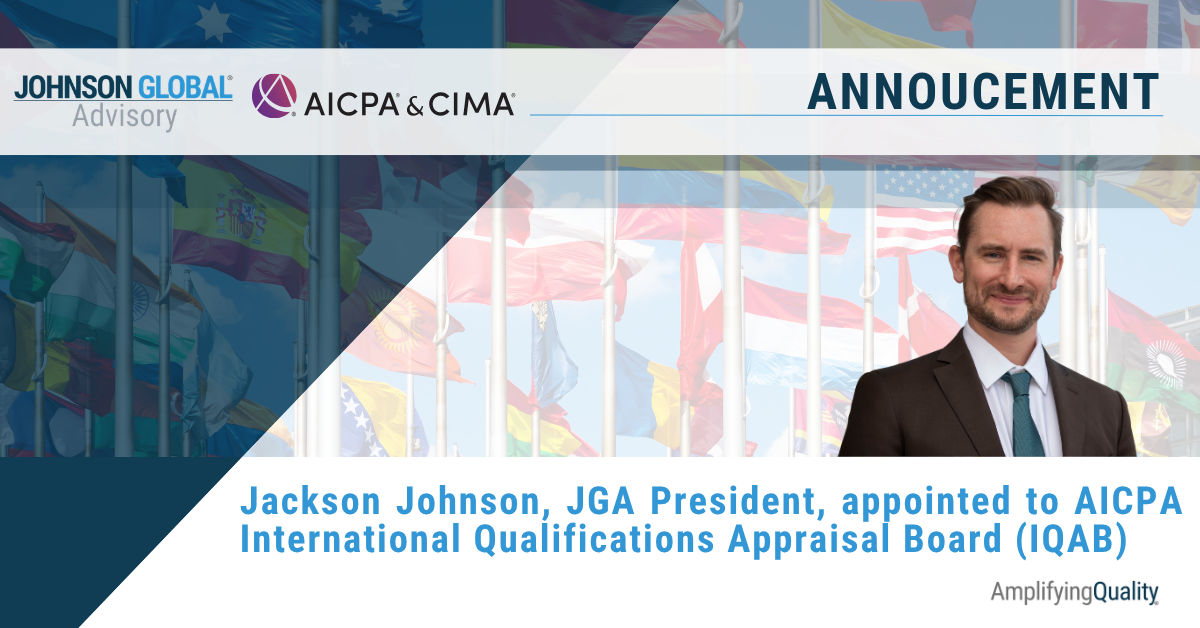
Johnson Global Advisory is pleased to announce that Jackson Johnson, CPA, President, has been appointed to serve on the AICPA & NASBA International Qualifications Appraisal Board (IQAB). The IQAB is responsible for evaluating international accounting qualifications and facilitating mutual recognition agreements between the United States and other countries, helping to support global mobility and consistency in professional standards. “It’s an honor to serve on the IQAB and contribute to efforts that strengthen the global accounting profession,” said Johnson. “As the profession continues to evolve, collaboration across jurisdictions is critical to maintaining high standards and enabling greater mobility for accounting professionals worldwide.”
Few technologies have generated as much excitement—and as much promise—for accounting firms as artificial intelligence (“AI”). The potential to streamline audit execution, reduce hours, and enhance firm profitability is real and already being realized. However, AI does not simply change how audits are performed; it fundamentally alters how firms must think about oversight, responsibility, and quality management. As regulators sharpen their focus on AI‑enabled audits, firm leadership must move beyond adoption and address a more complex challenge: establishing clear and scalable AI governance. This article outlines why AI governance is now a strategic imperative for accounting firm leadership. As discussed in JGA’s article What Regulators Expect to See When AI is Used , inspectors do not evaluate AI tools in isolation. They evaluate whether the engagement team obtained sufficient appropriate audit evidence, exercised professional skepticism, and applied appropriate supervision and review when AI was used. Those expectations are grounded in existing auditing standards and apply regardless of whether AI was used for risk assessment, testing, or documentation support. Against that backdrop, AI governance is not simply about approving tools or managing technology risk. It is about ensuring the firm’s system of quality management supports consistent, supervised, and well-documented use of AI that aligns with audit objectives and withstands inspection scrutiny. When firms treat AI as an IT matter, governance discussions tend to center on 1) Data security, 2) System access, 3) Vendor due diligence, and 4) Infrastructure controls. Those topics matter—but they are only the baseline. Inspectors do not evaluate whether AI systems are well engineered; they evaluate whether AI enabled audit work complies with standards, supports professional judgment, and is governed within the firm’s system of quality management. In short, AI governance is a firmwide audit quality issue, not a back office technology function. Using AI does not change the auditor’s responsibilities. Requirements still apply when AI is used for 1) Audit evidence, 2) Professional skepticism, 3) Supervision and review, 4) Engagement partner accountability and 5) Firm level quality controls. From an inspection standpoint, AI introduces new audit quality risks, including: Over reliance on automated outputs Reduced professional skepticism (automation bias) Inconsistent application across engagements Insufficient documentation of judgment Lack of transparency around how conclusions were reached These are not IT risks—they are audit quality risks. AI Touches Nearly Every Component of a QC System Under modern quality management frameworks (including PCAOB QC 1000 , AICPA SQMS No. 1, IAASB ISQM 1), AI affects nearly every component of a firm’s QC system, not just technology or data governance.