PCAOB 101 – Part III: Exploring Enforcement Inquiries

PCAOB 101 Part III: Exploring Enforcement Inquiries is the third of our three-part series on the inspection process. Please also explore Part I: Preparing for a PCAOB Inspection and Part II: Navigating Inspection Week for additional insights.


PCAOB 101 – Part III: Exploring Enforcement Inquiries 


The PCAOB has multiple divisions; the largest includes the Division of Registration and Inspections (or DRI). The second largest division is the Division of Enforcement and Investigations (or DEI). While the inspection process acts as a “monitor” ensuring firms adhere to the audit standards, identifying areas for remediation and improvement, the enforcement process is more akin to the “judge and jury” enforcing compliance and deciding on various repercussions for noncompliance. In Parts I and II, we cover the inspection process. Now, in Part III, we’re going to provide an overview of the enforcement process. 


Enforcement Inquiries 


The enforcement division performs both informal and formal inquiries as part of its information gathering process to determine whether to pursue an enforcement action or not. Through our work supporting firms and their in-house and external counsel through enforcement proceedings, we know that the sources of tips and referrals are not specifically disclosed, but DEI does have contact information for tips and referrals online on its website; these tips could stem from anyone whether auditors, investors or the general public. We also know that there appears to be a correlation between enforcement inquiries and a) engagements with poor inspection results, b) firms with repeat/recurring inspection deficiencies (indicating a failure to sufficiently remediate) and c) SEC matters including restatements and SEC investigations. Based on the potential severity of the matter, DEI will either launch an informal or formal inquiry. DEI leadership has confirmed publicly that DEI (i.e. inspection results) are the largest source of referrals to DEI attorneys. 


Informal Inquiry 


Most DEI matters start as an informal inquiry whereby the firm can expect to receive an information request. Inquiries can be targeted at a firm, employees of the firm, such as the engagement partner, engagement quality reviewer or even the engagement manager, or both the firm and its employees. In addition, the investigation could be focused on a specific engagement or may focus on the firm and its system of quality control, or both. 

Although the inquiry is considered “informal,” be not deceived; all communication with the PCAOB’s DEI is formal and should be considered as information that will be reviewed and potentially used in the case against the firm or its employees.  In other words, when receiving a DEI inquiry, presume potential litigation and respond very carefully. 

The initial communication will not specifically detail the crux of DEI’s focus, but it will make specific data requests.  Through these requests, firms can begin to narrow down the potential concern(s).  For instance, enforcement will often ask for audit workpapers for a specific issuer, for specific years and sometimes for narratives regarding audit procedures performed in certain audit areas. Through the power of deduction, if a firm received poor inspection results months earlier in the same focus area, one can reason that DEI is likely investigating the same or similar matter. 

The inquiry process starts with data requests, typically being audit workpapers, although firms will sometimes need to provide new / additional documentation depending on the requests. As well, DEI will often request email communications. This is a legal matter, so firms need to understand the preservation requirements and should not be deleting emails or other communication after receiving a DEI inquiry. 

Documents must be provided in very specific formats that include the metadata (i.e. various tags linked to data files such as dates documents were created, modified, etc.). We recommend collaborating with counsel to ensure full compliance with the data requests; there are specific service providers that can help with the document production to ensure compliance with PCAOB expectations.  Document requests can be very large, so don’t underestimate the time required to comply. While firms may ask for additional time if needed, a pro-active response from the firm demonstrates cooperation. 

As DEI goes through the information provided, additional questions or documents may be requested, so there can be multiple phases of back-and-forth. If the enforcement team is unable to resolve its questions through the data requests and/or if the firm/engagement team is being non-cooperative, DEI will then launch a formal investigation through an Accounting Board Demand. 


Formal Investigation 


Although most investigations start through informal inquiries, some may begin directly with a formal investigation. The starting point is always the same: the document request. Once documents have been reviewed, testimony of individuals relevant to the investigation is often required.  While DEI consists predominantly of lawyers, they also have accountants (i.e. auditors) who assist with the investigation process. For instance, while lawyers will build the case and determine the legal ramifications, they consult with accountants who assist in the review of data and advise on the technical auditing standards and rules of the PCAOB. 

Interviews start with a set list of questions though these are not communicated in advance and the enforcement team could expand as needed. Typically, the interviews are geared towards the engagement partner, the EQR, and the engagement managers for engagement deficiencies and then firm-level professionals for more quality control related matters.  Again, it will always depend on the scope of the investigation, but the enforcement team will make it explicitly clear who they want to interview. 

Interviews can take entire days, but there are breaks built into the process, much like the inspection process. During these breaks, we find it beneficial for the firm and its staff to debrief the questions with its legal counsel as well as any accountants and/or PCAOB consultants. Legal counsel and the expert can help interpret the nature of the queries and help the engagement team understand the potential issues and where the PCAOB is going with its questioning. 


Enforcement Actions 


After testimony is complete, the enforcement team will review the totality of the evidence and conclude on whether to pursue an enforcement actions, if any. The most common actions include one or a mix of the following: 

  • Fines of both individuals and/or of firms. 
  • A permanent or temporary bar of individuals from associating with a PCAOB-registered firm 
  • Revocation of the Firm’s PCAOB registration. 
  • Restrictions on activities such as prohibiting taking on new clients or limiting the types of clients a firm or individual may audit. 
  • Remedial actions, sometimes requiring an independent monitor to ensure appropriate execution. 

As DEI evaluates enforcement actions, the investigation team will consider the cooperation of the firm and/or individuals involved in the investigation. Proactive responses, such as immediately remediating issues identified by PCAOB inspectors and investigators can also help reduce enforcement actions as it demonstrates that all parties involved take the matters seriously.  Finally, transparency (read: honest and fully responsive) is paramount to the enforcement process. Whatever you do, do NOT modify audit workpapers; the PCAOB requests metadata and will drill into modifications to workpapers. 

With enforcement, this is truly a case of “no news is good news.” In the absence of enforcement actions, DEI will not specifically communicate the closure of an inquiry; rather firms will simply not hear anything additional from DEI. Much like the SEC and comment letters, regulatory bodies often reserve the right to continue to pursue matters in the future should additional information come to light and thus, there is no formal conclusion communicated to the respondents. 


Preparation 


As we stated earlier, nothing about the enforcement process is informal; firms and individuals need to take the process seriously. Just as with inspections, first impressions matter.  When a firm receives an enforcement inquiry, we recommend consulting with legal counsel immediately. And, just as DEI uses both lawyers and accountants, so too, should firms engage both legal counsel and accountants (or PCAOB consultants) to help navigate the enforcement process. Lawyers and accountants can help to: 

  • Interpret the data request to better understand the potential concerns and narrow down the scope as much as possible. Both legal and accounting support can also help determine the potential severity of the issue and the likelihood of advancement to further stages in the enforcement process. 
  • Assist with the review of deliverables to the enforcement team.  Part of that review is ensuring documentation is being provided as requested with the appropriate metadata. We’ve seen firms provide data without paying attention to the detailed requests and then having to go back and provide modified data.  The PCAOB is strict regarding documentation modification and now, in addition to the general inquiry, the firm is left having to demonstrate that it did not in fact modify any of the workpapers, providing even more documentation. In addition, we have helped review written memos and firm replies to specific questions, ensuring that the documentation is fully responsive to the request. 
  • Prepare individuals for testimony, coaching them on how to respond from a legal and technical accounting perspective, ensuring consistent communication. The key here is to be transparent in defending the work performed. 

We’ve seen many firms attempt to handle informal inquiries on their own and then bring in legal counsel later in the process when the inquiry turns formal. The enforcement process can be costly, both in terms of time and money. Bringing in the right counsel early in the process can help maximize efficiency by doing it right the first time, provide complete and accurate responses and demonstrating to the PCAOB that the firm is professional and understands the potential gravity of the matter, creating a strong first impression. Of course, the best advice we can give is for firms to invest in strong quality controls and for engagement teams to apply the auditing standards and perform strong quality audits. Take the inspections process seriously and with clean inspections and quality audits, firms will likely avoid much of the hassle and the potential repercussions that come with enforcement.  As with all things PCAOB, know that you don’t have to go it alone.  For more information, refer to the PCAOB’s guide to proceedings and don’t hesitate to reach out to us; we’ve supported numerous firms through enforcement proceedings and know the process well. 


Key Takeaways 


  • First impressions matter. Hire the right legal counsel and accounting experts to help navigate PCAOB enforcement inquiries. 
  • The first step in an inquiry is the documentation request. Be sure to provide a complete set of workpapers and documentation, adhering to the specific DEI requirements. 
  • For depositions, be transparent: that means being honest and fully responsive to the questions and not avoiding or trying to withhold pertinent information. 
  • Proactive firm and engagement team responses (and remedial actions, if relevant) and strong cooperation with the PCAOB DEI team can help reduce potential enforcement actions. 

April 28, 2026
In our work with firms, we have seen a clear shift in how monitoring and remediation are viewed under modern quality management frameworks. They are no longer treated as retrospective compliance exercises. Instead, engagement deficiencies are increasingly used as meaningful inputs into an ongoing, risk-based system designed to identify issues early, address them thoughtfully, and reduce the likelihood of recurrence. Regulatory messaging reinforces this evolution. Oversight bodies are signaling a shift in focus from isolated engagement outcomes and more on whether firms have a system of quality management that consistently detects quality risks, responds appropriately, and demonstrates that remediation is working in practice. Based on our experience, while individual engagement deficiencies remain important, the more critical question is becoming how firms analyze, respond to, and learn from those issues over time. Engagement Deficiencies Are Signals, Not Endpoints Engagement deficiencies can surface through many channels, including pre-issuance reviews, internal inspections, post-issuance reviews, peer reviews, and regulatory inspections. Regardless of source, firms benefit most when these findings are evaluated through a consistent quality management lens. In practice, we encourage firms to look beyond whether a single engagement fell short . The more meaningful consideration is whether the deficiency points to potential weaknesses in governance, methodology, training, supervision, resourcing, or monitoring activities. We often observe that when issues are quickly labeled as engagement-specific, without assessing whether they reflect broader quality risks, valuable insight is lost. Modern quality management frameworks are designed to use these signals to strengthen the system, not simply close individual findings. What Effective Monitoring and Remediation Looks Like in Practice Firms that navigate this environment effectively tend to apply a disciplined and repeatable approach when deficiencies are identified. Based on our experience supporting firms across a range of practice areas, several elements consistently make a difference: Assess whether the issue may be systemic Recurring observations across engagements, service lines, or time periods often indicate system-level risk. Similar documentation gaps, inconsistent application of methodology, or supervision challenges rarely arise in isolation. Perform meaningful root cause analysis Effective root cause analysis typically moves beyond surface explanations. Firms benefit from evaluating whether policies and procedures were designed appropriately, implemented as intended, and supported by sufficient training, time, and resources. Design remediation that directly responds to the quality risk Remediation is most effective when it is clearly linked to the underlying risk. Depending on the circumstances, this may include enhancements to methodology, targeted training, revised review requirements, or changes to engagement acceptance, staffing, or oversight processes. Validate remediation through timely monitoring Implementing corrective actions is only part of the process. In our experience, firms are most successful when they also confirm that remediation operates as intended. Follow-up monitoring performed early enough to prevent recurrence is a critical component of this step. Failure to validate remediation remains one of the most common and consequential weaknesses we observe across firms. Case Study: When Remediation Is Not Validated In one situation we encountered, a firm identified engagement deficiencies through post-issuance reviews. The issues mirrored observations that had previously been noted during peer review and were communicated as having been addressed by the group responsible for report issuance. However, responsibility for validation was not clearly assigned, and no follow-up procedures were performed to evaluate whether the revised processes were effective. Subsequent post-issuance reviews, triggered by an organizational change, revealed that similar and additional deficiencies had re-emerged. From a quality management perspective, this was not an engagement execution failure. It reflected a breakdown in monitoring and remediation. The firm had information indicating quality risk but did not adjust its monitoring activities to confirm that remediation was working. Viewed through a system lens, this represents a system-level deficiency rather than an isolated engagement issue. Quality Management Applies Across All Engagement Types Modern quality management frameworks apply across a firm’s assurance and attestation practice, including private company audits, public company audits, SOC engagements, nonprofit audits, and other services. Deficiencies identified in any practice area may signal broader weaknesses in: Governance and leadership Methodology and training Monitoring activities Remediation processes In our experience, firms struggle to maintain an effective system of quality management when certain practices are treated as exempt from system-level evaluation. Key Takeaways Engagement deficiencies are inputs into the system, not endpoints. Recurring issues often indicate systemic quality risk. Remediation should be validated, not assumed. Monitoring activities should evolve as risks emerge. Quality management applies across all engagement types. Firms that treat monitoring and remediation as a continuous feedback loop, rather than a periodic exercise, are typically better positioned to improve engagement quality and respond to evolving regulatory expectations. Looking for an independent perspective on whether engagement deficiencies have been fully addressed? Based on our experience working with firms across assurance and attestation practices, Johnson Global Advisory supports clients by performing independent reviews, validating remediation efforts, and strengthening monitoring processes. If you would like support refining policies, training, workflows, or documentation standards, or would benefit from an objective assessment ahead of regulatory, peer, or internal inspections, contact your JGA audit quality advisor to discuss your needs.
April 28, 2026
Artificial intelligence (“AI”) is no longer experimental in public company audits. From risk assessment and scoping decisions to population testing, anomaly detection, and documentation support, AI enabled tools are increasingly embedded in audit execution and workflow. As use expands, the auditor’s core obligations do not shift to the technology, they remain with the engagement team. If AI is used to inform judgments, influence the nature, timing, or extent of procedures, or summarize and interpret information, auditors must still demonstrate that they obtained sufficient appropriate audit evidence and applied professional skepticism throughout. In practice, auditors must understand what the tool is doing, confirm that inputs are complete and accurate, and evaluate whether the outputs are reliable and fit for purpose in the specific audit context. While the auditing standard devoted solely to AI have not been issued, our experience is that inspectors have been increasingly direct—through staff publications, questions from inspectors in the field, and public remarks—about what they expect to see when AI is used. The expectations are grounded in existing standards and longstanding inspection focus areas: audit evidence, supervision and review, professional skepticism, and firm quality control (now quality management). In other words, AI does not create a “new” audit; it amplifies the need to show your work. Firms that treat AI as a “shortcut”, rely on outputs that cannot be explained or reproduced, or fail to govern and document how tools were selected, configured, and monitored are inviting new risks to support their audit conclusions. Conversely, firms that can clearly articulate the purpose of the tool, how it aligns to audit objectives, how inputs and outputs were validated, and how experienced personnel supervised and challenged the results will be far better positioned during inspection. The table below summarizes what inspectors typically expect to see documented when AI is used in a public company audit. Firms can use these themes to evaluate whether their engagement documentation tells a complete story that an experienced auditor (and an inspector) can follow from objective, to procedure, to results, to conclusion. 
March 30, 2026
In a previous article, Back to Basics: Audit Documentation Failures Have Become Dangerous Low Hanging Fruit , we highlighted how audit documentation had quietly re-emerged as a source of regulatory risk after years of relative deprioritization. While PCAOB Auditing Standard 1215, Audit Documentation (AS 1215), has historically been cited less frequently than other standards, our direct experience from recent inspection activity, enforcement actions, and internal inspection results, demonstrate that documentation failures are increasingly treated as indicators of deeper execution, supervision, and quality management breakdowns. In today’s environment, audit documentation is no longer merely a record of work performed. It is the primary evidence inspectors rely on to evaluate whether an engagement was properly planned, executed, and supported at the time the auditor’s report was issued. What has been low-hanging fruit now requires firms to close these gaps and transform them into a load-bearing foundation for audit quality. From Rare Enforcement to Systemic Inspection Risk AS 1215 establishes clear requirements regarding what must be documented, when documentation must be completed, and how engagement files must be assembled and retained. As discussed in our prior article, failures to comply with these requirements were historically viewed as technical or secondary issues, often resulting in inspection comments rather than enforcement action. That distinction is no longer meaningful. Recent enforcement actions involving backdating, improper (both intentionally, and inadvertent) modification of workpapers, and failure to timely assemble a complete audit file reflect an evolving regulatory view. Documentation failures do not simply violate procedural requirements; they call into question the credibility of the audit opinion itself. More importantly, beyond enforcement, documentation deficiencies are increasingly cited as core inspection findings. Inspectors are challenging situations where engagement teams assert that work was performed but cannot demonstrate that work within the archived file. In these cases, the absence of timely, complete, and clear documentation is no longer treated as a formality. It is treated as evidence that the engagement may not have been properly executed, supervised, or supported in accordance with PCAOB standards. This represents a fundamental shift. Documentation is no longer “low-hanging fruit.” It is a systemic inspection risk that cuts across execution, supervision, and firm-level quality management. From Misconduct to Execution Failures Pervasive documentation failures that do not involve intentional misconduct but still result in non-compliance are increasingly observed. For example, reviewer signoffs occurring near the documentation completion date, rather than contemporaneously with the performance of audit procedures, raise questions about whether effective supervision occurred during the audit or was deferred to meeting archiving deadlines. Similarly, engagement teams may assert that key judgments can be explained verbally, even when those judgments are not clearly documented in the audit file. In today’s environment, the distinction between “we can explain it” and “it is clearly documented” is critical. If procedures, judgments, and conclusions are not evident in the documentation itself, inspectors increasingly conclude that the work was not performed in accordance with PCAOB standards. The issue is not whether the engagement team can explain what they did after the fact. The issue is whether the archived documentation allows an experienced auditor, with no prior connection to the engagement, to understand the procedures performed, evidence obtained, and conclusions reached at the time of the auditor’s report. When documentation fails to reach that standard, inspectors are increasingly concluding that the audit itself was not properly executed, regardless of intent. This reflects an important shift. Documentation failures are no longer viewed primarily as misconduct. They are viewed as symptoms of execution breakdowns, including delayed supervision, compressed review cycles, and audit workflows that defer documentation until the end of the engagement. As a result, AS 1215 has become a direct proxy for how audits are actually performed in practice. How the 14-Day Documentation Completion Requirement Changes the Risk Profile The execution risks are further amplified by the PCAOB’s shortened documentation completion timeline. Recent amendments to AS 1215 reduce the timeframe to assemble a complete and final audit file from 45 days to 14 days after the report release date. While this change may appear procedural, its implications are operational. Under this accelerated timeline, engagement teams no longer have a meaningful post-issuance window to resolve review notes, complete documentation, or finalize supervisory evidence. What were once viewed as “clean-up” activities are now more likely to result in timing violations and non-compliance. This shift places increased emphasis on: Contemporaneous documentation Real-time supervision Realistic workload and staffing models Audit Documentation as a Cornerstone of Audit Quality Audit documentation has long been described as low-hanging fruit in the inspection process. That characterization no longer reflects its role in today’s regulatory environment. Documentation now serves as the primary lens through which regulators assess whether an engagement was properly executed, supervised, and supported. With shortened timelines, expanded quality management expectations, and increased regulatory scrutiny, firms can no longer treat documentation as a downstream activity. It must be embedded into how engagements are planned, staffed, reviewed, and completed. In an environment where inspection conclusions are driven by what is, and what is not, in the audit file, strong documentation is not merely defensive. It is foundational to audit quality. At Johnson Global Advisory , we support firms in selecting, implementing, and optimizing these tools to meet their unique needs. For more insights, visit our blog or contact us to learn how we can help your firm AmplifyQuality®. For more information, please contact your JGA audit quality expert .
March 30, 2026
Mergers and acquisitions within the accounting firm industry continue to accelerate, driven by succession planning needs, technology investment, talent constraints, geographic expansion, and the pursuit of new service lines. The pace and volume of transactions is being fueled, in large part, by private equity investment in the accounting firm space. Yet as deal activity accelerates, so does a critical reality: the long term success of an acquisition is determined well before the transaction closes—and long after the announcement is made. Experience across the profession shows that insufficient due diligence and poorly executed post acquisition integration are the most common sources of value erosion in accounting firm transactions. What the Regulator is saying and How JGA sees it At the AICPA December 2025 conference on Current SEC and PCAOB Developments, common topics were the presence of private equity in the accounting firm space and the opportunities and challenges that come with this investment. As it relates to private equity, then-acting PCAOB Chair George Botic noted that while these investments have the potential to enhance audit quality by increasing firm capacity and modernizing audit tools with advanced technologies, the presence of private equity presents a risk that firms shift incentives to prioritize profitability over audit quality. Mr. Botic stated, “Both AI and private equity investments in accounting firms carry the potential to truly reshape the profession. Yet these opportunities come with clear challenges to ensure that overreliance on AI and the pressures of private equity do not jeopardize audit quality.” At JGA, we expect the PCAOB to increase its inspection focus on a firm’s system of quality management. To the extent that acquisitions present quality risks to a firm, we expect increased attention from the PCAOB in terms of how firms are managing these risks. Due Diligence: Looking Beyond the Numbers Financial performance, partner buy ins, and deal structure naturally receive significant attention during an acquisition. However, professional services firms—particularly those providing audit and assurance services—certain of the greatest risks often reside outside the financial statements. Effective accounting firm due diligence must assess not only what the target firm has earned, but how it has earned it—and whether that performance is sustainable. This includes gaining a deep understanding of: Audit quality history, including inspection and peer review results, Independence, ethics, and regulatory compliance practices, Industries served, industry concentration and related expertise, Client concentration, retention trends, and engagement risk profiles, Partner governance, compensation alignment, and succession readiness, Technology platforms, data security, and scalability, and Firm culture, leadership dynamics, and decision making processes. When these areas are not rigorously evaluated, issues frequently surface after the transaction closing—when remediation is more disruptive, more expensive, and far more visible to regulators, clients, and staff. The Risks of Inadequate Due Diligence Inadequate diligence often leads to unanticipated post transaction challenges, including: Regulatory findings related to legacy engagements, Independence violations requiring retroactive remediation, Client attrition driven by service disruption or cultural misalignment, Talent loss stemming from unclear expectations or compensation inequities, and Technology incompatibilities that impair efficiency and data integrity. Deficiencies inherited through acquisition can affect inspection outcomes, firm reputation, and overall audit quality long after the transaction closes. Integration: Where Value Is Created—or Lost Even when due diligence is performed thoughtfully, post acquisition integration remains the most common point of failure. Integration is often underestimated, treated as an operational exercise rather than a strategic initiative requiring sustained leadership attention. Successful integration goes far beyond combining systems or standardizing branding. It requires deliberate alignment across how the firm operates, governs itself, and delivers quality—particularly in areas such as: Audit methodology and documentation standards Quality management systems and monitoring processes Partner roles, authority, and accountability Talent development, evaluation, and retention Communication with clients, regulators, and staff Absent a structured integration plan, firms risk operating as a collection of semi independent practices rather than a cohesive organization. This fragmentation can undermine consistency, weaken accountability, and complicate regulatory compliance. A Strategic Imperative in a Changing Profession As consolidation continues and regulatory scrutiny intensifies, rigorous due diligence and disciplined integration are no longer optional. They are essential to managing risk, sustaining quality, and realizing the full value of a transaction. For accounting firm leaders, the message is clear: growth through acquisition can be a powerful strategy—but only when supported by a comprehensive understanding of what is being acquired and a deliberate plan for how the combined firm will operate as one. Firms that treat diligence and integration as leadership imperatives—rather than transactional steps—are better positioned to protect audit quality, retain talent, and preserve client trust while achieving growth objectives. JGA’s Role Guiding Firms through these Opportunities For firms seeking to grow through acquisition without sacrificing quality, control, or visibility, JGA is a solution. JGA is uniquely qualified with deep experience working with accounting firms on quality management, governance, and operational transformation. We have proven due-diligence tools built that are designed to be practical, adaptable, and immediately usable—while also supporting long term consistency as firms pursue multiple acquisitions over time. Ready to get started or need help refining your acquisition activities? Contact your JGA audit quality expert today to schedule a consultation and ensure acquisition activities are tailored to your firm’s needs.
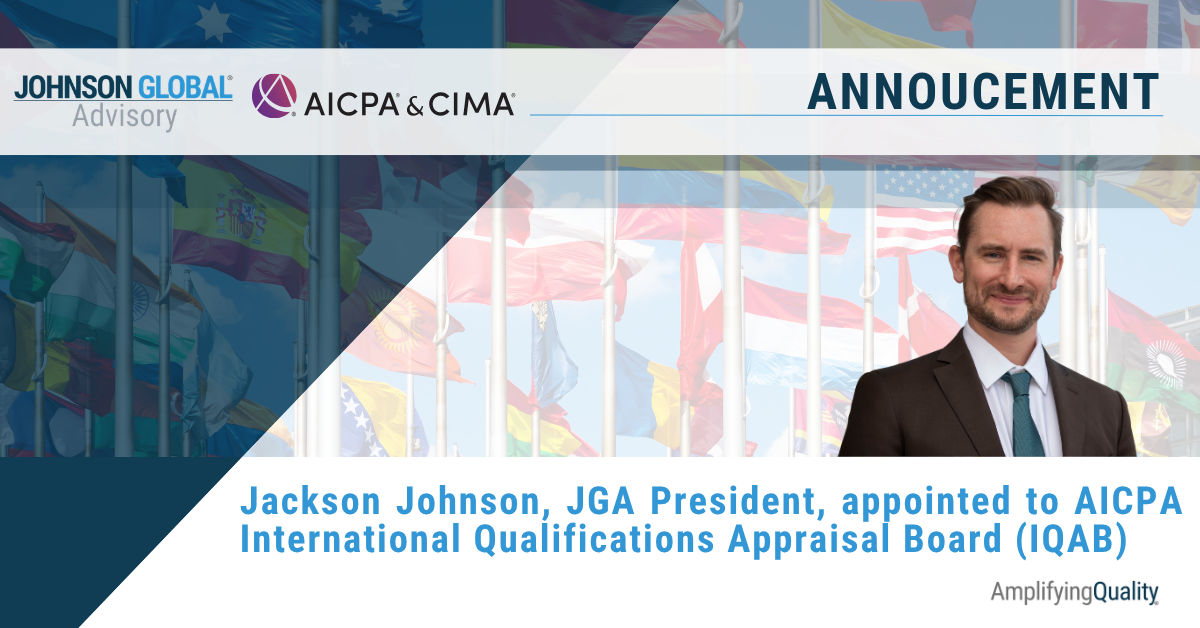
By Jackson Johnson February 24, 2026
WASHINGTON, D.C.: — Johnson Global Advisory (JGA) is proud to sponsor the ALI’s Accountants’ Liability 2026 conference hosted by the American Law Institute (ALI). The two‑day program will take place May 14–15, 2026, in Washington, D.C., with a live webcast option available for remote attendees. This annual conference is a premier forum for accounting firm leaders, in‑house counsel, litigators, and regulators to examine the evolving landscape of accountants’ liability, enforcement priorities, and risk management. The 2026 program will explore how recent regulatory, litigation, and technological developments are reshaping the profession and what firms can do to proactively respond. “We are pleased to once again sponsor the ALI Accountants’ Liability Conference,” said Jackson Johnson, President of Johnson Global Advisory. “This event consistently brings together leading regulators, practitioners, and risk professionals to discuss the most pressing liability and oversight issues facing accounting firms today. We value the opportunity to engage with participants and contribute to these important conversations.” The program will feature nationally recognized panels of practitioners, general counsel, industry professionals, and government officials. Planned discussions will address current and emerging challenges facing accounting firms, including: Regulatory and enforcement priorities impacting the accounting profession Recent trends in accounting‑related litigation PCAOB and SEC perspectives on audits, inspections, and gatekeeper liability The impact of AI, cryptocurrency, and emerging technologies on audit quality and firm risk Best practices for navigating an evolving and uncertain regulatory environment Register by April 13, 2026, to attend in-person and use the code “ JGA2026 ” to save $250 off . OR, for webcast attendance, use the code " JOHNSON " to save $125 off the tuition. Click here to register. To learn more about how Johnson Global partners with in-house and outside counsel to support public accounting firms, we invite you to explore our latest brochure. This resource outlines our approach to independent monitoring and consulting, including how we assist firms in navigating PCAOB and SEC investigations, implementing quality control improvements, and responding to regulatory findings. Download the brochure below to see how our experienced team can help your firm meet today’s compliance challenges and build a stronger foundation for the future. Get a copy of our brochure here . About Johnson Global Advisory Johnson Global partners with leadership of public accounting firms, driving change to achieve the highest level of audit quality. Led by former PCAOB and SEC staff, JGA professionals are passionate and practical in their support to firms in their audit quality journey. We accelerate the opportunities to improve quality through policies, practices, and controls throughout the firm. This innovative approach harnesses technology to transform audit quality. Our team is designed to maintain a close pulse on regulatory environments around the world and incorporates solutions which navigates those standards. JGA is committed to helping the profession in amplifying quality worldwide. Visit www.johnson-global.com to learn more about Johnson Global.
By Jackson Johnson February 24, 2026
We’re pleased to share that Joe Lynch , JGA Shareholder, will be presenting in a series of AICPA & CIMA webcasts focused on practical considerations for Quality Management. These sessions are designed to provide guidance in your QM journey. They support key elements such as engagement quality reviews, root cause analysis, and ongoing monitoring and remediation. Register for Upcoming Sessions Session 1 — Quality Management: Engagement Quality Reviews What you’ll learn: Practical considerations for your firm's responsibilities for engagement quality reviews and the reviewers requirements when executing engagement quality reviews under the updated quality management standards, including how to make EQRs scalable and effective. Register for this session here . Session 2 — Quality Management: Performing a Root Cause Analysis What you’ll learn: How root cause analysis supports remediation by identifying underlying drivers of the findings and deficiencies; supporting the design of corrective actions that prevent recurrence. Register for this session here . Session 3 — Quality Management: My System is Set Up — Now What? What you’ll learn: Post-implementation requirements of SQMS No. 1, which include monitoring activities, evaluating findings and deficiencies, remediation, and the annual evaluation process—so your system stays responsive and effective. Register for this session here . These sessions are included with a current Webcast Pass. At Johnson Global Advisory , we support firms in selecting, implementing, and optimizing these tools to meet their unique needs. For more insights, visit our blog or contact us to learn how we can help your firm AmplifyQuality®.
By Jackson Johnson January 20, 2026
JGA is pleased to announce that Joe Lynch , JGA Shareholder, will be a featured guest on the upcoming AICPA & CIMA A&A Focus live webcast on February 4, 2026. Joe has been invited to join the program to provide insights on changes to engagement quality review requirements. This appearance offers a valuable opportunity for viewers to gain practical, real-time guidance on effective EQR practices—an increasingly critical component of audit quality and compliance under the evolving professional standards landscape. Click here for m ore information about the program and registration details. At Johnson Global Advisory, we support firms in selecting, implementing, and optimizing these tools to meet their unique needs. For more insights, visit our blog or contact us to learn how we can help your firm AmplifyQuality®. For more information, please contact your JGA audit quality expert .
January 20, 2026
Introduction The accounting firm industry experienced a ground-breaking transaction in August of 2021 when TowerBrook acquired EisnerAmper, which marked the first private equity (“PE”) transaction of a large-scale accounting firm. This transaction was structured using an alternative practice structure (“APS”). Historically, licensing and independence rules have barred non-CPAs from owning accounting firms. Through an APS, a PE firm may invest in the non-attest entity with service lines such as tax advisory and consulting. The CPA partners retain control over the attest functions, which preserves regulatory compliance. While the APS model has been in existence since the 1990s, this August 2021 transaction brought new attention to this structure. What has followed is an extraordinary volume of deal activity. Per the CPA Trendlines (“CPAT”) Cornerstone report posted on November 18, 2025, CPAT has tracked over 115 PE-related transactions from 2020 to 2025, with over 80 transactions in 2025. While PE in the accounting firm space is no longer news, the pace and volume of transactions is certainly news-worthy. Impact of PE Investment The impact of PE investment on the accounting firm space is unprecedented. The APS has enabled PE to fuel billions of capital investment. PE-backed firms provide immediate payouts to partners at appealing valuations while providing access to capital to these firms for merger and acquisition growth, technology investments, and other priorities. Well-capitalized firms now have an improved ability to invest in technological capabilities, attract experienced talent to be more competitive for college graduates, and improve their market position. With new technologies, routine tasks are being automated such as data entry, tie-outs and controls testing, resulting in less time needed to perform certain audit procedures. What the regulators are saying At the AICPA December 2025 conference on Current SEC and PCAOB Developments, common topics were the presence of private equity in the accounting firm space and the opportunities and challenges that come with this investment. PCAOB Acting PCAOB Chair George Botic described that both transformative technologies (e.g., artificial intelligence or “AI”) and the continuing expansion of private equity investments in accounting firms are two developments that bring opportunities and challenges. Mr. Botic noted that while AI has enhanced risk assessment, reduced manual processes and made it possible to efficiently analyze entire populations of data (which can reduce the risk of missing irregularities or unusual patterns), that overreliance on AI may ultimately threaten auditors’ exercise of professional skepticism and judgment. As it relates to private equity, Mr. Botic noted that while these investments have the potential to enhance audit quality by increasing firm capacity and modernizing audit tools with advanced technologies, the presence of private equity presents a risk that firms shift incentives to prioritize profitability over audit quality. Mr. Botic stated, “Both AI and private equity investments in accounting firms carry the potential to truly reshape the profession. Yet these opportunities come with clear challenges to ensure that overreliance on AI and the pressures of private equity do not jeopardize audit quality.” SEC SEC Chair Atkins discussed in his remarks that he would like the PCAOB to modify its inspections process to place more reliance on the system of quality management and that inspection of certain engagements would inform the PCAOB if the firm’s system of quality management is effective. He also expressed a view that accountability for audit quality should move upward to firm leadership. How is a firm’s system of quality management (“SQM”) impacted? Today’s transforming environment has far-reaching impacts on a firm’s SQM. This publication will focus on risk assessment, governance and leadership, ethics and independence, resources, engagement performance, and monitoring and remediation. 
By Jackson Johnson December 30, 2025
As we wrap up an incredible year, we’re showcasing the insights that sparked the most conversations and drove the most impact. Here are the Top 10 Actionable Insights from 2025: Use of Other Auditors: Managing Risk and the New PCAOB Standard ISQM 1, SQMS 1: Influencing the Firm on the Benefits Beyond Compliance (Part II) Case Study – Example Successor Auditor Considerations QC 1000 Implementation: Key Themes and Guidance from the PCAOB Workshop Clearing the Roadblocks: Auditing Estimates with Confidence in Small Firms Enhancing Auditor Independence: Key Themes from PCAOB Recent Spotlight The Never-Ending Story: How to Remediate Recurring EQR Findings – Part Deux Cryptic Audits of Crypto Assets: Auditing Digital Assets Innovative Solutions for QC 1000, SQMS 1, & ISQM 1: Quality Management tools in the Marketplace Enhancing Audit Evidence: PCAOB Expectations and What We Are Seeing in Practice
November 24, 2025
As companies increasingly rely on cloud platforms, external data providers, and integrated third-party systems, the boundary between “internal” and “external” information has blurred. Audit evidence today may originate outside the company, but often arrives through the company, transformed, mapped, merged, or embedded within systems before it reaches the auditor. In response to this evolving landscape, the PCAOB amended AS 1105, Audit Evidence, effective for audits of fiscal years beginning on or after December 15, 2025. Central to these amendments is AS 1105.10A, which introduces a principle-based, risk-scalable framework for evaluating the reliability of electronic information provided by the company. At JGA, we view this development as a natural response to the data ecosystems shaping today’s financial reporting. We also see it rapidly becoming a recurring area of focus by global audit regulators, particularly when the information supports significant risks, revenue, fraud procedures, or management estimates. This article summarizes key themes from the PCAOB’s Board Policy Statement on Evaluating External Electronic Information (issued September 2025) paired with practical observations from JGA’s inspection support and methodology enhancement work with firms across the profession. Why External Electronic Information is a Growing Focus Area Across industries, external platforms now drive core financial and operational processes: payment processors, logistics platforms, third-party fulfillment solutions, subscription systems, industry data services, and more. Although such information originates from outside the company, it is often: Received, stored, or routed through company systems Transformed within spreadsheets or EUCs Merged with internally generated data Exported in formats that allow modification Provided to auditors without a traceable chain to the original source. Our direct experience working with our clients shows that PCAOB inspection teams consistently emphasize that external does not inherently mean reliable. The auditor must understand how the information was obtained, how it was handled, and whether there was a reasonable possibility that it could have been modified before reaching the auditor. Understanding AS 1105.10A The Board Policy Statement highlights two foundational expectations: 1. Auditors should understand the source and flow of the information. Inspection teams frequently question whether the engagement team understood: The true originating source of the data How the company received it (e.g., automated feed vs. manual upload) Whether the information is editable or configurable Whether it passed through multiple systems or spreadsheets How it is used in controls, substantive testing, or significant estimates In JGA’s experience, inspection findings often arise from situations where teams relied on a “system-generated” or “externally sourced” report without fully understanding where it came from or whether it could have been changed. 2. Auditors should address the risk of modification. The standard allows for two broad approaches, testing the information itself or relying on controls, depending on the assessed risk. The standard is intentionally flexible, but this flexibility requires well-supported judgments, especially for information affecting significant accounts or fraud risks. The PCAOB also acknowledged scenarios where separate testing may not be required (e.g., direct-to-auditor feeds or read-only API transfers) but emphasized that this exception applies only when the risk of modification is no more than remote. What We Observe in PCAOB Inspections Through JGA’s transformation activities with firms, we continue to see consistent challenges in the following areas: Reliance on information provided by the company without evaluating whether transformed, filtered, or merged with other data sets. Use of external or industry data in analytics without understanding the methods, assumptions, or relevance to the issuer. External information embedded in significant estimates or complex models without evaluating management’s process for compiling that information. System-generated or external journal entry listings used in fraud procedures without establishing completeness and reliability. In each of these situations, inspection teams focus on whether engagement teams understood how the information was obtained, how it was processed, and whether there was a reasonable possibility of modification before it reached the auditor. Emerging PCAOB Expectations Although the standard is principles-based, several expectations are now appearing consistently in inspections: Reliability cannot be presumed, external information must be evaluated just like any other audit evidence. Understanding the company’s process for receiving and handling external information is foundational. Judgments about whether separate testing is required must be risk-responsive and well-supported. Documentation should clearly articulate the source of the information, the company’s process, and the basis for concluding the information was reliable. These expectations are shaping how firms need to think about IPE testing, data flows, and the role of technology within the audit. Areas Where Firms Often Seek Assistance Across our methodology enhancement and inspection support work, firms consistently ask for help in: Identifying when information is “external electronic information provided by the company”. Determining whether reliance on management’s process is appropriate. Navigating situations where data passes through multiple systems or spreadsheets. Evaluating third-party or industry data used in analytics. Assessing effects on significant risks, especially revenue and fraud. Aligning documentation practices with PCAOB expectations. Many firms have strong processes for testing IPE, but other nuances of the standards require an additional layer of consideration that is still evolving in practice. Looking Ahead As companies build increasingly automated and interconnected systems, auditors must deepen their understanding of those environments to obtain sufficient appropriate evidence. Firms that proactively adapt their methodologies and train engagement teams will be better positioned for both compliance and audit quality. At JGA , we help firms interpret emerging regulatory requirements, strengthen methodologies, and enhance the use of technology and data in the audit. Ultimately, ensure compliance and consistency get to our ultimate goal of helping firms grow and scale responsibly. To learn how we can help your firm navigate these expectations and #AmplifyQuality, visit www.johnson-global.com, or contact a member of your JGA client service team.